The Appeal of the Laugavegur: Why It Keeps Making Bucket Lists
When one hike earns the title of all-time favourite, it’s worth asking what sets it apart. After hiking dozens of trails together as a family, Iceland’s iconic Laugavegur trail was unanimously voted into our all-time favourites hall of fame. If you’ve ever wondered what makes the Laugavegur trail so popular, this post is for you.
I’ll be honest — before we started, I was mildly concerned the trail wouldn’t live up to the hype. I was the one who pushed for it, and I didn’t want anyone to feel disappointed. Spoiler alert: it delivered. Joshua rated it his all-time favourite hike, and even Sarah — who groans every time we mention a new trail — was glad she came.
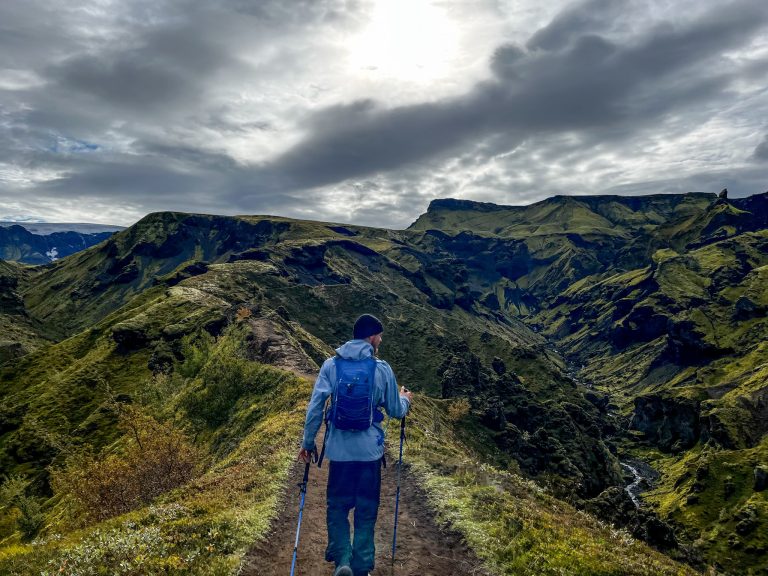
The Laugavegur delivers non-stop, picture-worthy views and a physical challenge that feels rewarding by the end of each day. Along the way, there’s also a quiet sense of connection — within your own group, and occasionally with the familiar faces you begin to recognize at camp or on the trail. Paired with ever-changing landscapes and just enough uncertainty to keep things interesting, those elements come together to create an experience that lingers long after you leave the highlands.
Changing Landscapes that Keep the Trail Fresh
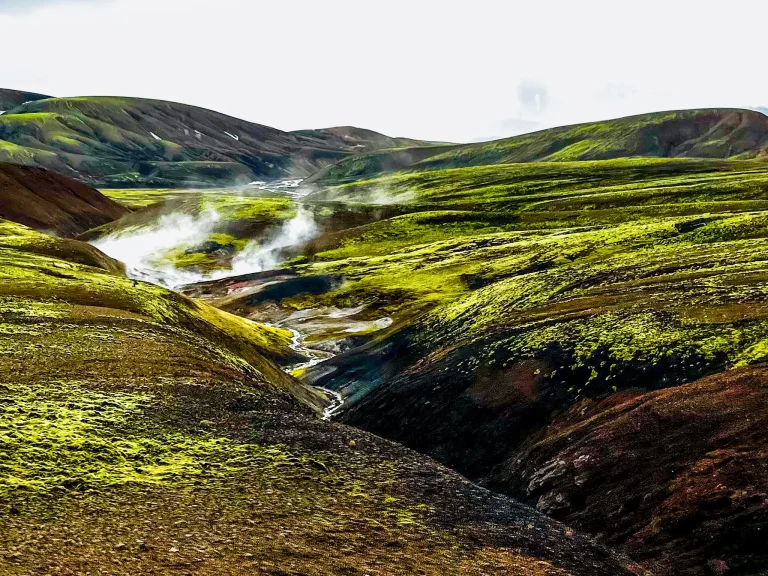
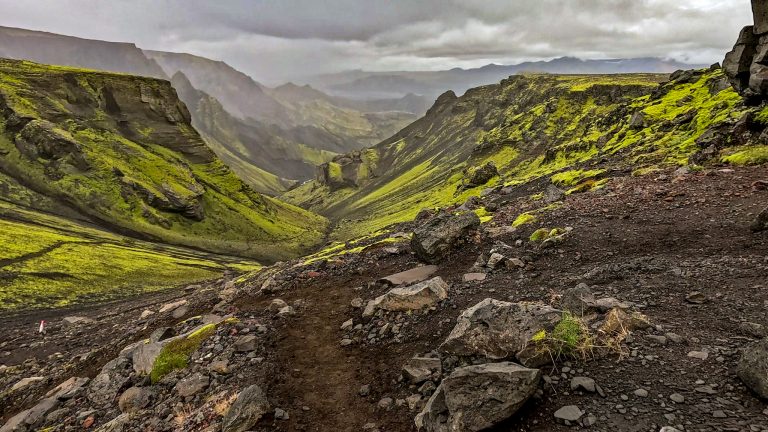
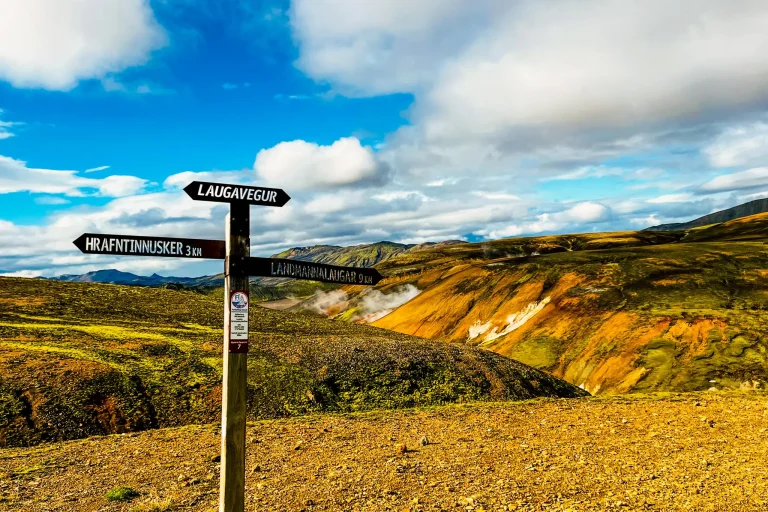
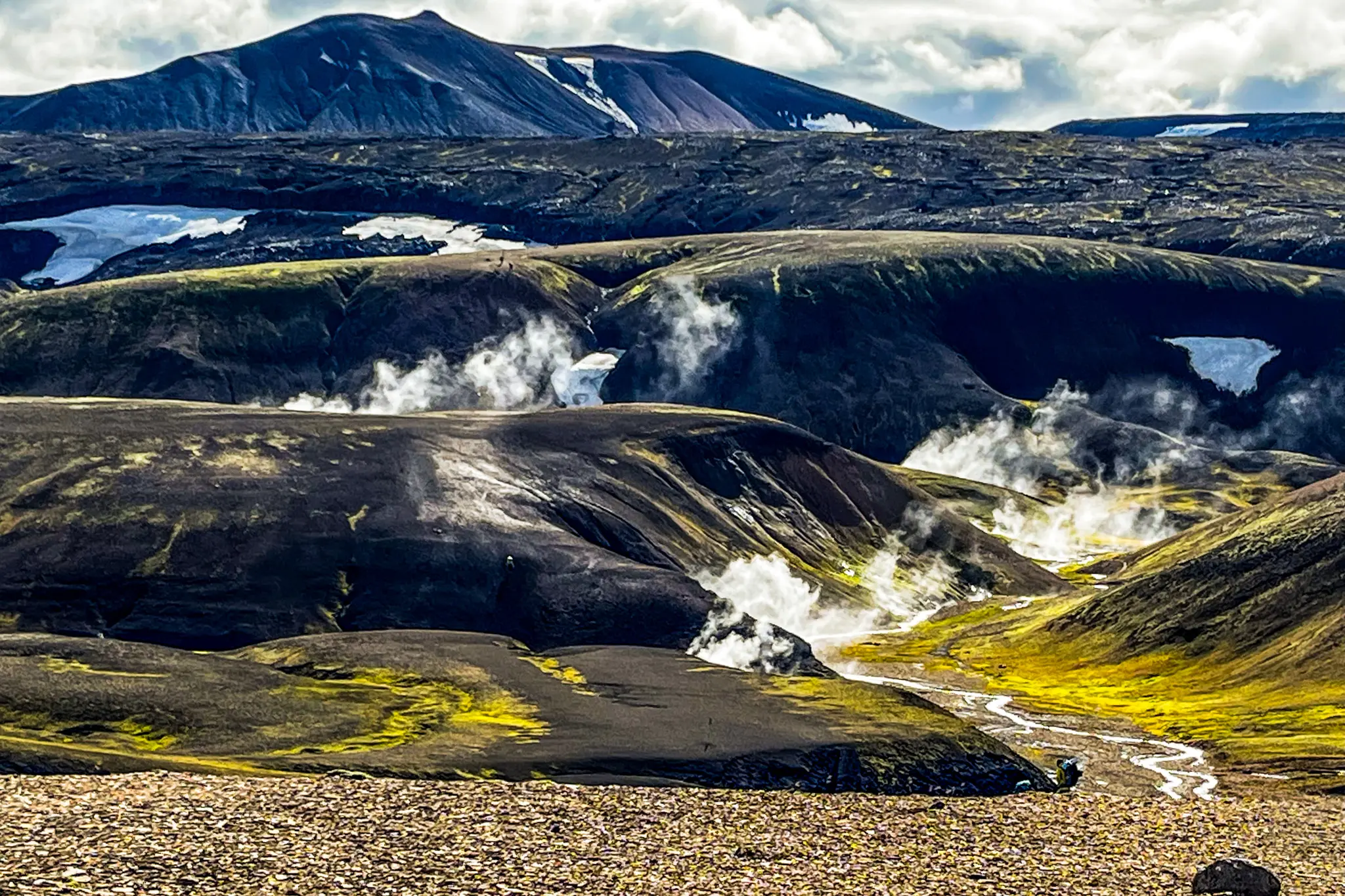
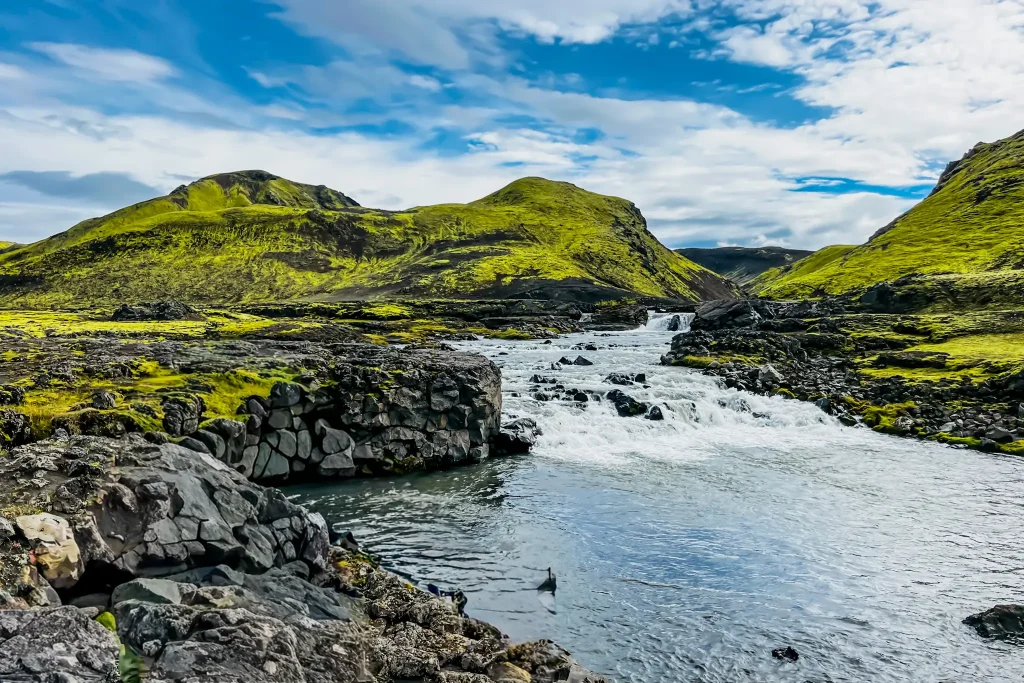
The landscapes on the Laugavegur trail are as varied as the miles are long. Geothermal areas give way to colourful rhyolite mountains. Black sand deserts stretch out under open skies, followed by river valleys and distant glacier views. The scenery changes often enough that the trail never feels repetitive.
Without doubt, it’s the most diverse trail we’ve ever hiked. But diversity alone doesn’t explain its pull. There’s a quiet beauty here that’s hard to capture. You’ll take countless photos, but none of them quite hold what it feels like to walk through the Icelandic highlands.
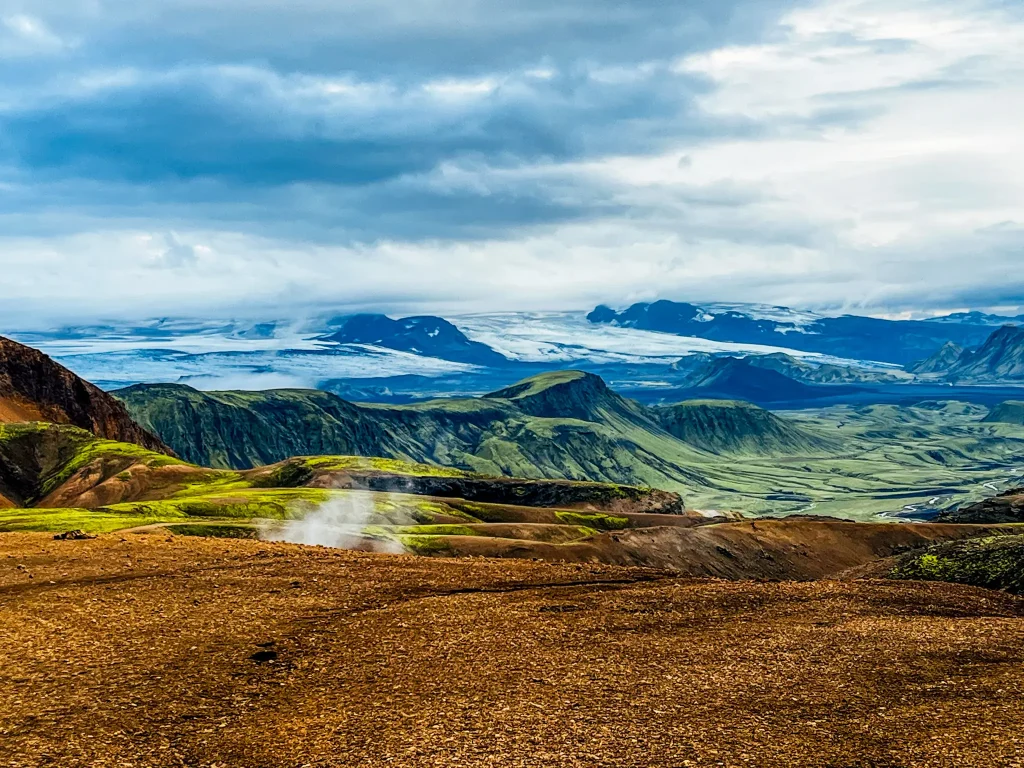
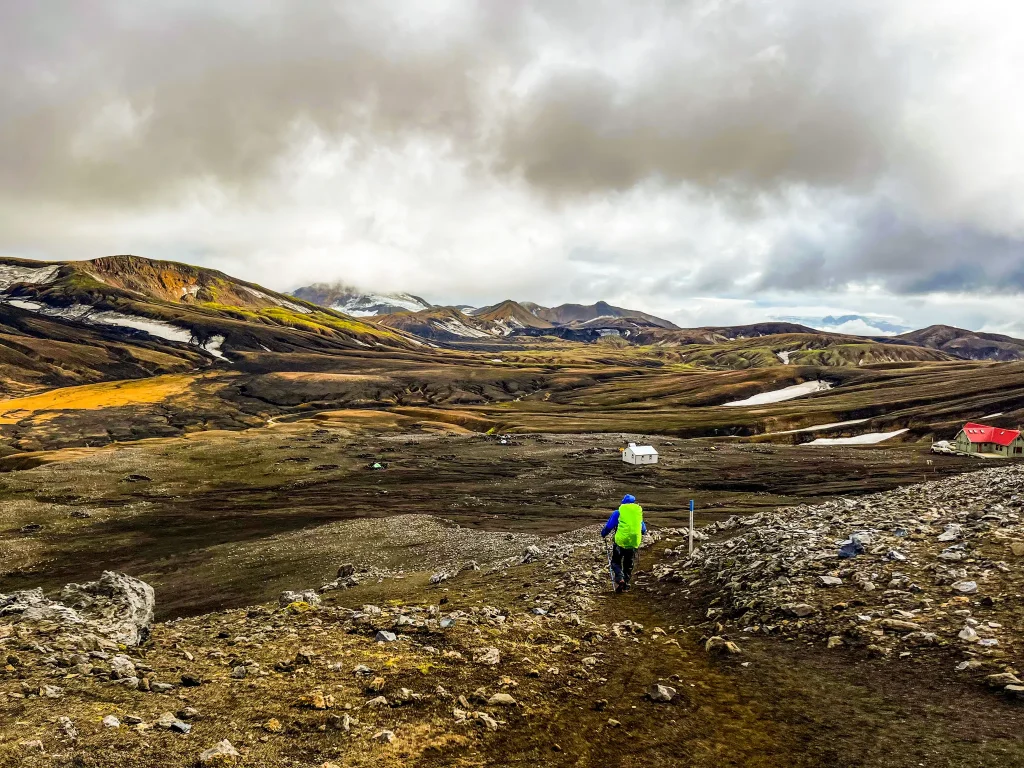
What makes the Laugavegur so popular isn’t just what you see. It’s where you are. The waterfalls and canyons of the South Coast are stunning, but the highlands feel different — raw, exposed, and untamed. Walking here feels less like sightseeing and more like being allowed a glimpse into the heart of Iceland itself. Whether you continue on to Skógar via the Fimmvörðuháls extension or finish in Þórsmörk, the highlands stay with you long after the hike is over.
Feels Remote Without Feeling Isolated
The Laugavegur holds an undeniable paradox: vast, remote landscapes paired with a quiet sense of community among those who walk it. The trail offers solitude without isolation, and kinship without crowding.
There are long miles to revel in the silence and beauty of the highlands, followed by shared moments when familiar faces reappear at camp. There’s space for introverts to savour the quiet, enough connection for extroverts to feel at ease, and a steady reassurance for everyone that — even in the wildness — you’re never truly on your own. Whether you’re staying in camp or in huts, you’ll be sure to meet a couple people along the trail.
A Challenge That Feels Achievable With Preparation
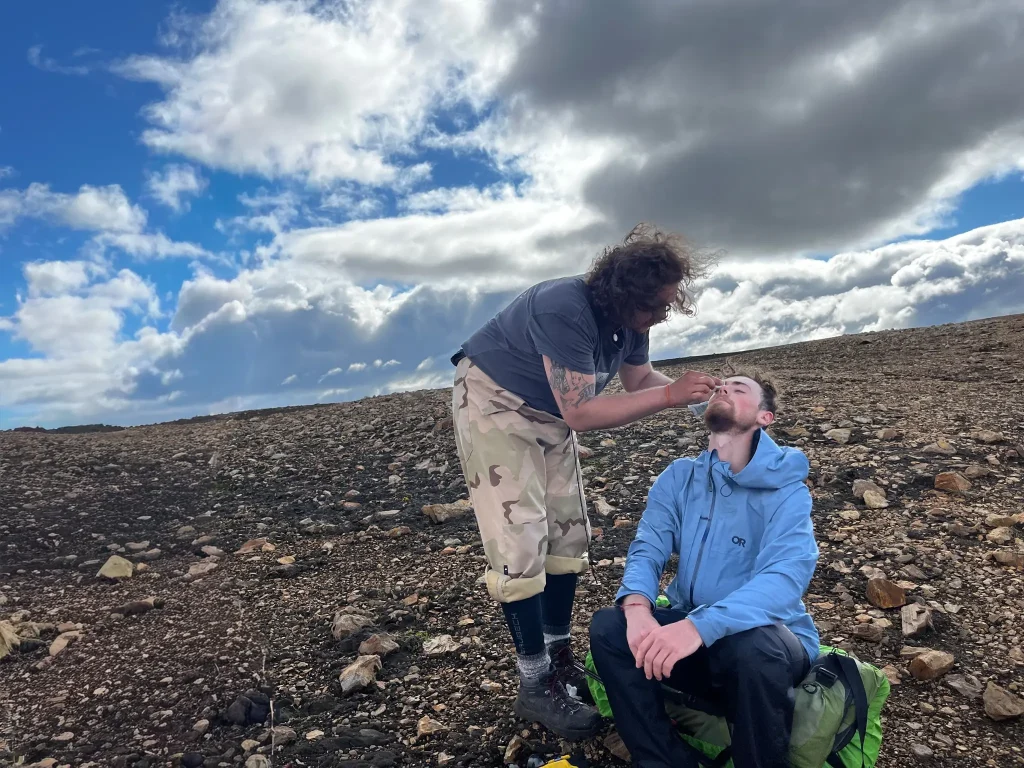
The Laugavegur isn’t technically difficult, but that doesn’t mean it’s easy. Some days ask more than you expect — especially when Iceland’s takes centre stage.
The first day is often the hardest, with the most sustained elevation gain, unless you continue on over Fimmvörðuháls. Add wind, rain, or cold into the mix, and the effort can quickly feel amplified. The trail itself remains straightforward, but the environment has a way of raising the stakes.

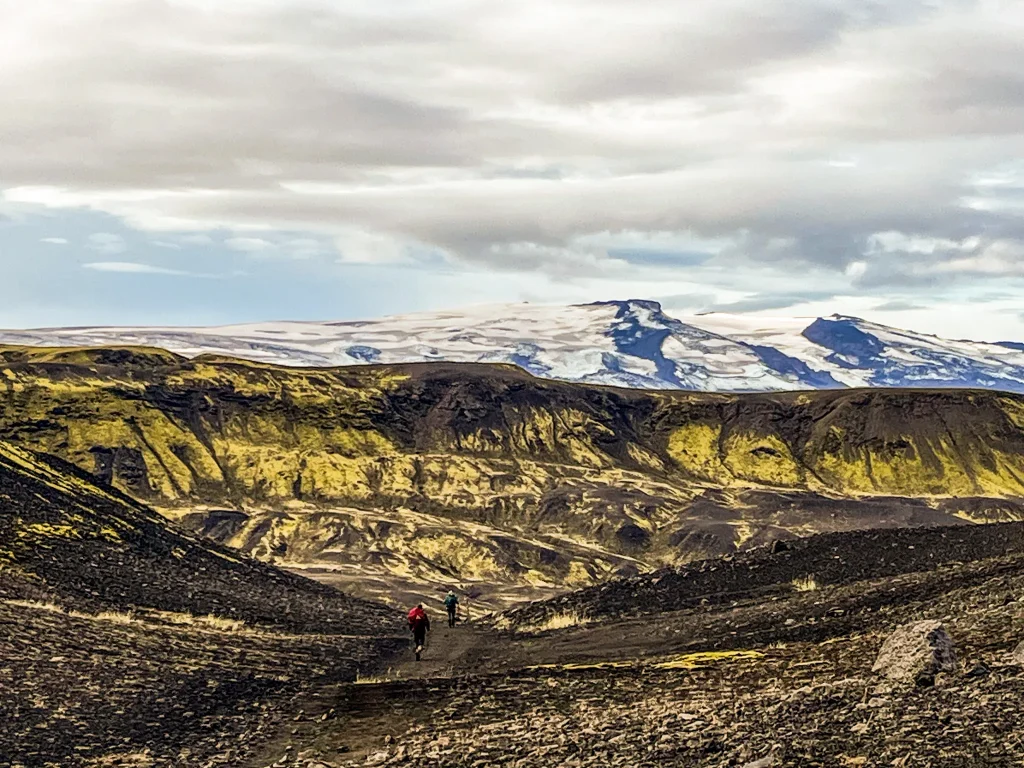
That’s where preparation changes everything. If you’ve packed layers that can handle Iceland’s weather, those hard moments still need to be endured, but they’re possible. Then they simply become part of the story you carry with you. The rain, the wind, the shifting conditions — they become the context that shapes the trail’s obstacles.
By the end of the day, the trail won’t feel generous. It will feel earned. And that sense of having met the landscape on its own terms is part of why the experience stays with people long after the walking is done.
Flexible Endpoints That Let Hikers Shape Their Experience
One of the best parts of the Laugavegur is the freedom to choose your own ending.
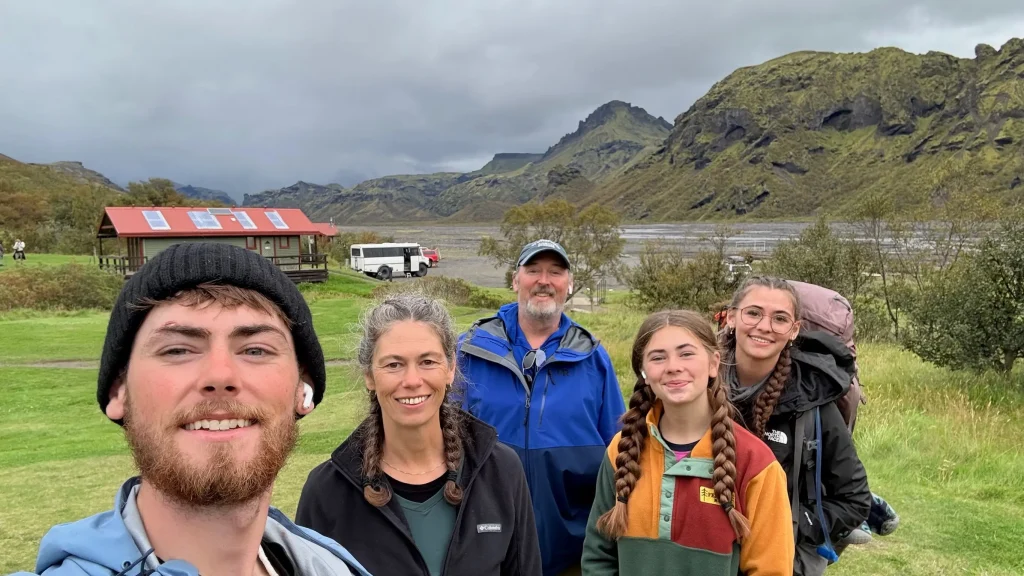
Þórsmörk is a hiker’s paradise, and many people choose to linger for a few days — exploring side trails, resting tired legs, and soaking in the shift from open highlands to sheltered forest. Others finish their hike feeling satisfied and take the next shuttle out of the highlands, content with the journey they’ve already completed.
If the logistics of getting on and off the trail feel intimidating, our Laugavegur transportation cheat sheet can help simplify that piece of planning.
For some hikers, though, the story doesn’t quite feel finished.
Still others are driven to experience everything the highlands have to offer. Fimmvörðuháls is like extra credit for those who want to fully immerse themselves in both the highlands and the Laugavegur. It’s more demanding, more uncertain, and more complex than what comes before it — and, naturally, the added challenge often brings deeper reward.
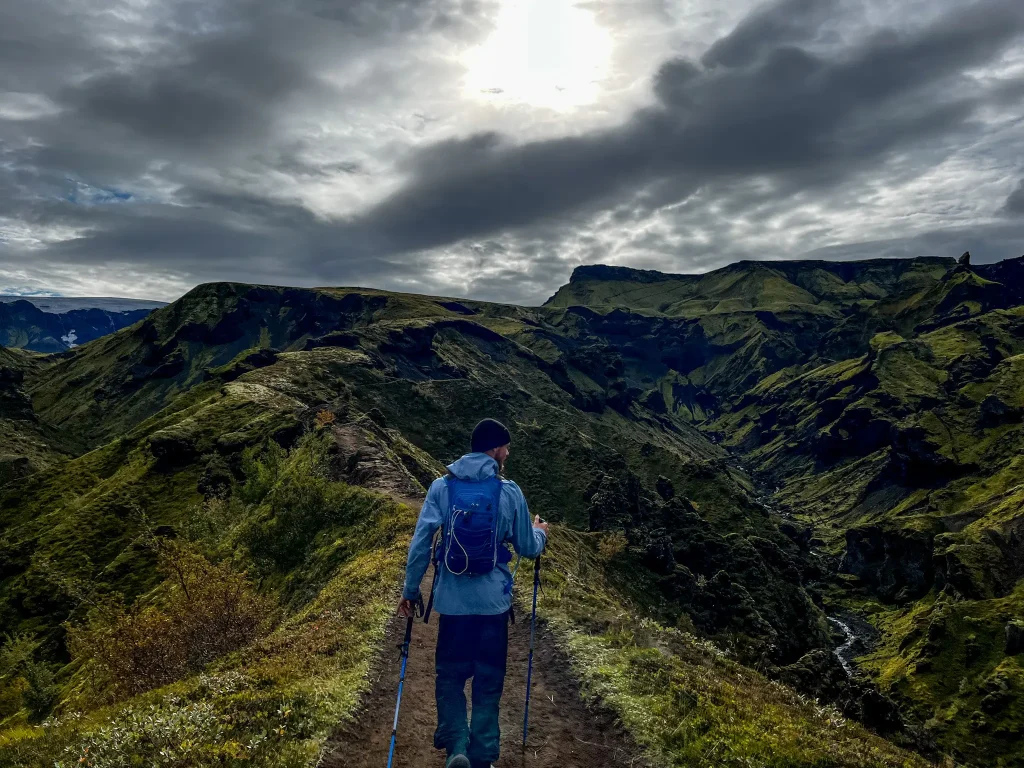
Deciding whether to stop in Þórsmörk or continue on is deeply personal, and there’s no single right answer. If you’re weighing that choice, it’s worth taking a closer look at whether you should add Fimmvörðuháls to the Laugavegur and what that decision really asks of you.
Your Hike. Your Way.
One of the defining features of the Laugavegur is that it allows the experience to be shaped by the hiker, as much as the hiker is shaped by the experience. There’s no single correct way to walk it, no fixed version of what the journey is supposed to look like.
You can camp or stay in huts. You can hike independently or join a guided group, haul all your gear or use a porter to lighten your load. You can move quickly or take your time. Each choice creates a different rhythm, a different relationship with the trail, and a different kind of challenge.
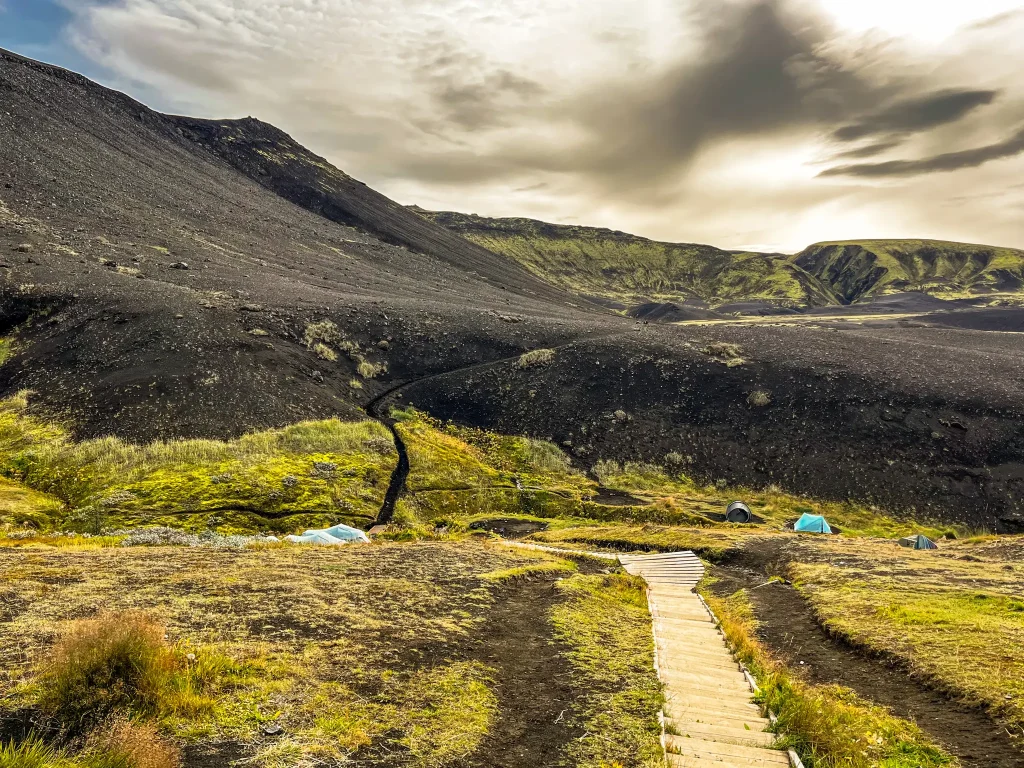
That freedom is meaningful — It allows different people with different abilities, comfort levels, and budgets to all experience the trail in the way that best suits them.
But it’s also intentional. Once you decide how you want to hike, those choices come with real commitments. Hut reservations lock in dates. Transportation needs to be coordinated. Weather and energy still have a say, but the structure you choose determines how much flexibility you truly have.
The Laugavegur doesn’t hand you a single experience. It hands you options, and asks you to choose the version that fits your priorities, your abilities, and the kind of story you want to tell when it’s over. That’s what makes the trail so powerful — and why no two hikes ever look quite the same.
It Fits Cleanly Into a Larger Iceland Itinerary
Another reason the Laugavegur is so popular is how naturally it fits into a broader Iceland itinerary. Unlike many iconic multi-day hikes that require a trip built entirely around them, the Laugavegur is only 55 kms, so it works as a focused adventure or as one part of a larger journey.
Most hikers spend three to four days on the Laugavegur itself, with the option to add one or two additional days by continuing on over Fimmvörðuháls. That time frame is long enough to feel epic, but not all consuming.
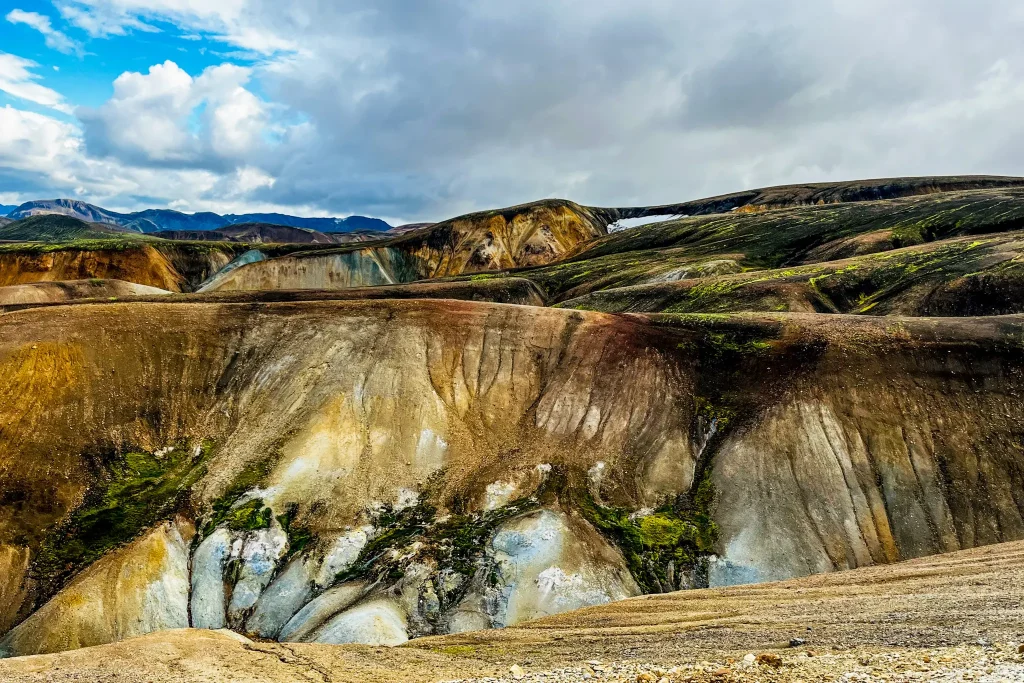
The trail begins deep in the highlands and finishes near the South Coast, making it easy to connect with other well-known regions. Many travellers pair the hike with time in Reykjavík, the Golden Circle, or a road trip along the south coast without feeling rushed or forced to choose one experience over another.
For people who may only visit Iceland once, that balance matters. The Laugavegur offers a deep, meaningful experience of the highlands while still leaving room for waterfalls, coastal scenery, and slower travel days before or after the hike.
Seeing how the Laugavegur fits into a broader Iceland itinerary often helps clarify whether the Laugavegur is right for you.
A Trail Worth Being Thankful For
Some places stay with you not because of what you accomplished there, but because of what you were allowed to witness. The Laugavegur is one of those places.
Walking through Iceland’s highlands day after day — watching the light shift across open valleys, feeling the weather move in and out, seeing the land change beneath your feet — creates a kind of awareness that’s hard to replicate elsewhere. The beauty here isn’t polished or curated. It’s raw, expansive, and quietly humbling.
There’s also an unspoken gratitude that comes with experiences like this. The time to go. The health to walk. The resources to travel. The freedom to move through a place like this on foot. None of that is guaranteed, and recognising it deepens the experience rather than distracting from it.
The Laugavegur doesn’t ask to be conquered or checked off a list. It invites you to slow down, pay attention, and receive what the land offers. And for those who are able to walk it, that invitation alone feels like a gift.