The Basics: Camping and Huts on the Laugavegur Trail
Camping or staying in huts on Iceland’s Laugavegur Trail shapes almost every other planning decision that follows. From pack weight and daily flexibility to comfort in bad weather, camping on the Laugavegur Trail influences far more than where you sleep. It also affects logistics, including how far in advance you need to book, how rigid your plans become, what happens if conditions change, and your total trail costs.
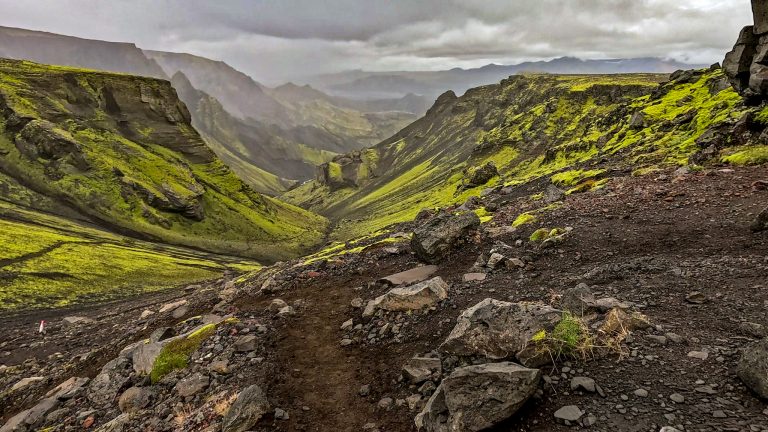
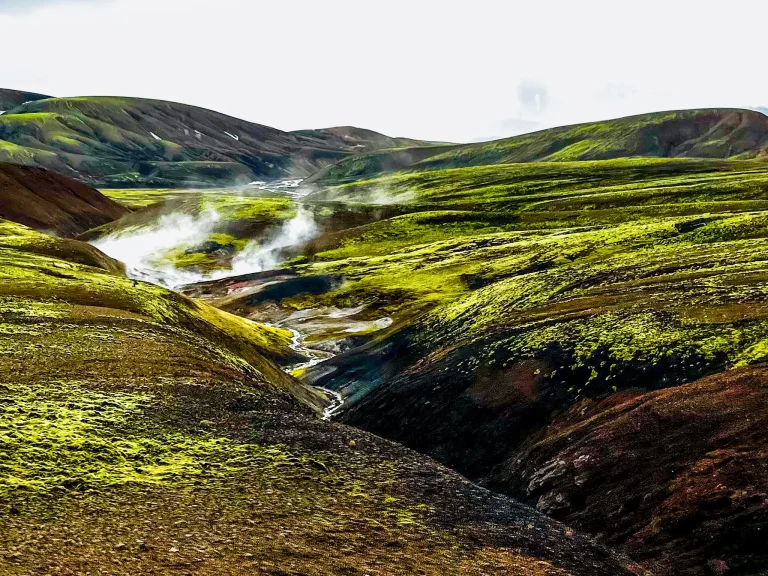
Accommodation isn’t just about comfort at night — it shapes how closely you experience the landscape itself. The shifting rhyolite mountains, black ash plains, glacier views, and deep green valleys are part of what makes the Laugavegur so popular. Choosing between huts and camping changes how you experience the landscape at the end of each day — whether you step inside to dry out or stay outside listening to the wind move across the valley.
This post breaks down both accommodation options in practical terms, based on what we had to sort through ourselves while planning the hike. It explains what camping and staying in huts actually involve, where and how to book, and what to know about reservation and cancellation policies before you commit.
Big Picture Overview: How Accommodation Works on the Laugavegur
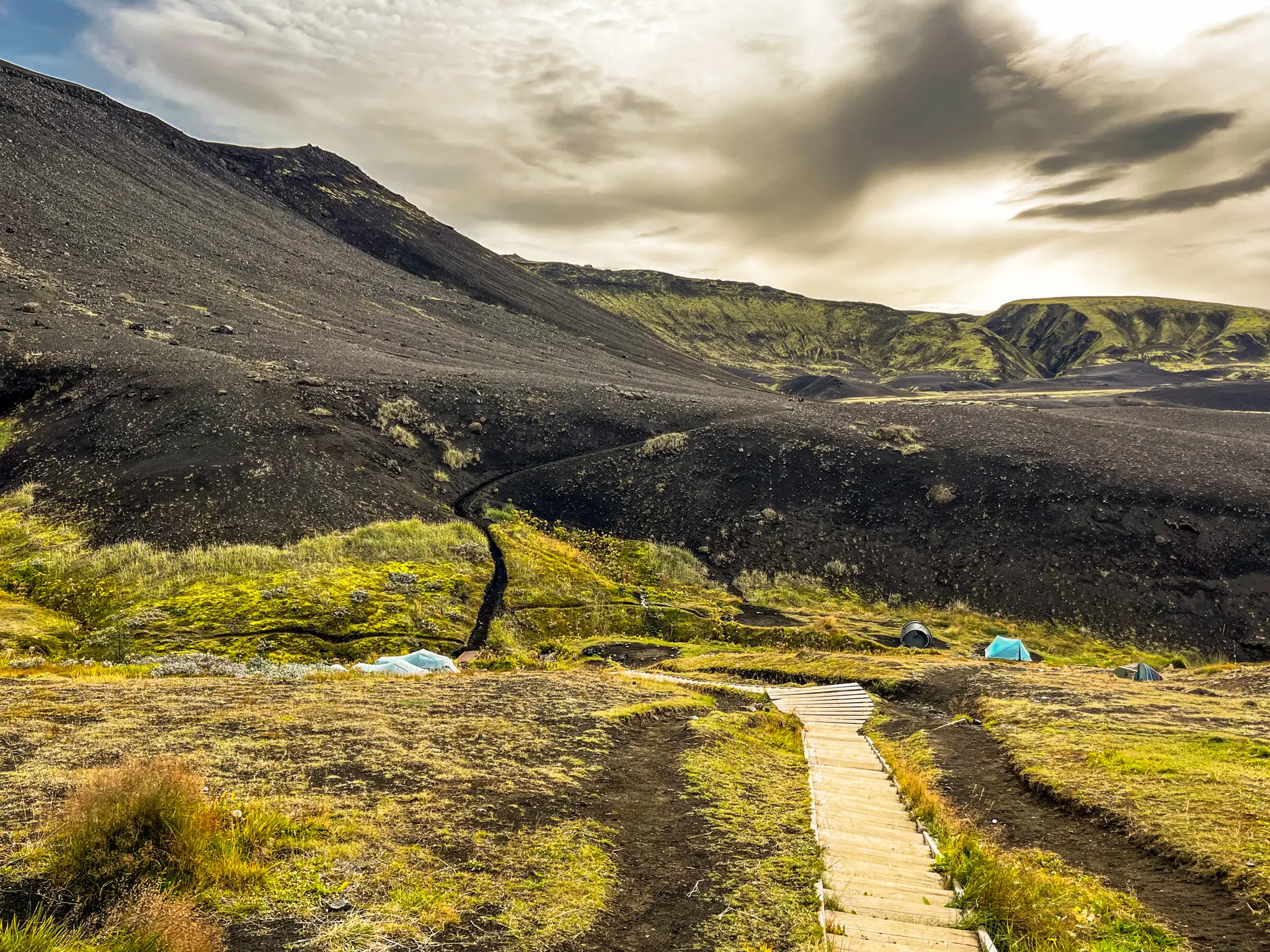
The Laugavegur Trail is built around a series of designated overnight stops. Each stage ends at a location with a mountain hut and an adjacent campground.
Camping is only allowed at these campgrounds. Wild camping along the trail is not permitted. Whether you camp or stay in huts, you move between the same core locations each day.
Hikers choose one of three options before arriving: staying in huts, camping, or combining both. This choice shapes how the rest of the trail is planned.
Overview of Laugavegur Hut & Campground Locations
With six established overnight stops on the Laugavegur, distances are often the first thing hikers look at when planning their days.
Distances Between Laugavegur Overnight Stops
| From → To | Approx. Distance | Notes |
|---|---|---|
| Landmannalaugar → Hrafntinnusker | ~12 km | Highest and most exposed section. Snow often lingers. Biggest elevation gain |
| Hrafntinnusker → Álftavatn | ~12 km | Long descent. Can be wet and windy near the lake. |
| Álftavatn → Hvangil | ~4 km | More sheltered than Álftavatn. |
| Hvangil → Emstrur (Botnar) | ~11 km | Rolling terrain with river crossings. |
| Emstrur → Þórsmörk | ~15 km | Long day for many hikers. Terrain varies. |
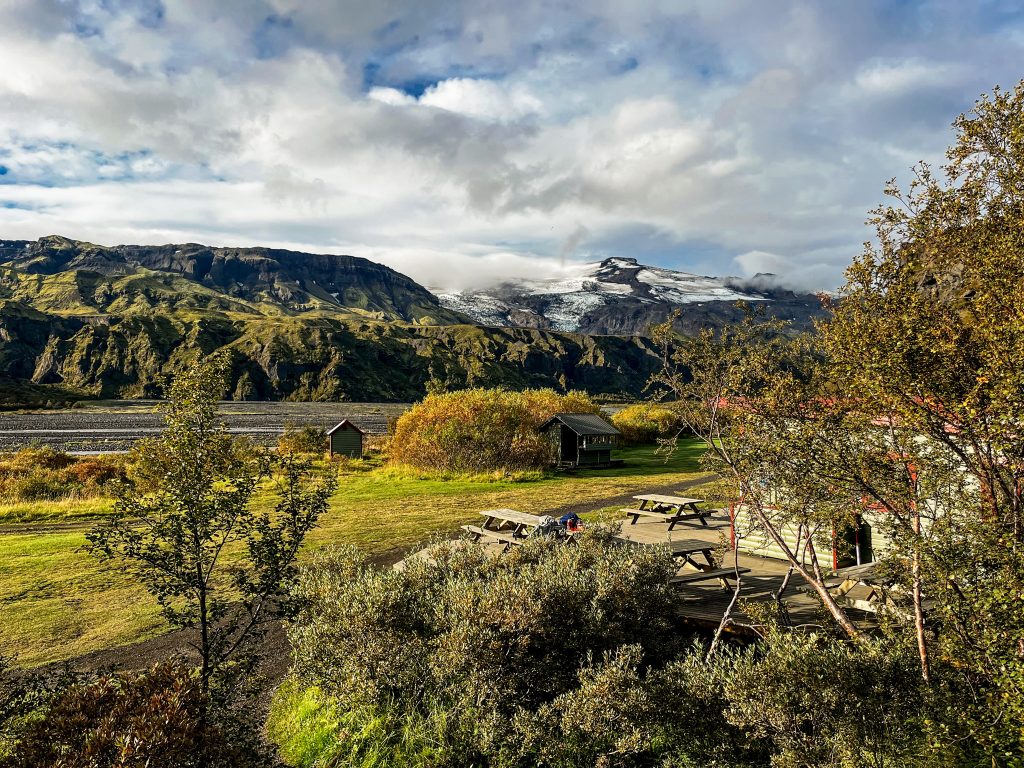
Þórsmörk isn’t a single campground — it’s a valley with three campgrounds spread a few kilometres apart.
ℹ️ Þórsmörk Campgrounds
Þórsmörk has huts in 3 different locations:
- Langidalur– the end of the Laugavegur
- Volcano Huts (Húsadalur)- ~ 2 kms northwest of Langidalur with various accommodations, including tents, private rooms, cottages, and a bar and restaurant.
- Basar– ~2 kms southeast of Langidalur with a river crossing. Fimmvörðuháls trailhead is at the Basar campground.
When we first arrived in Þórsmörk, I felt briefly disoriented because I hadn’t realised how spread out the campgrounds were, or how much distance sat between the end of the Laugavegur and the start of Fimmvörðuháls.
If you’re continuing past Þórsmörk, the Laugavegur–Fimmvörðuháls combined route adds another layer of logistics that isn’t immediately obvious on arrival.
Hut Area Amenities
Each hut area has a slightly different layout and set of amenities, which can affect comfort and planning at the end of long days. Understanding what’s available at each hut area helps set realistic expectations for huts and camping on the Laugavegur, especially in poor weather.
Shared Rules for Huts and Campgrounds
The following applies to both campers and hut guests:
- Bathrooms and drinking water are available at all locations
- Reservations are required before beginning the hike
- Showers are available for a fee at Landmannalaugar, Álftavatn, Hvanngil, Emstrur, and Þórsmörk
- All hikers must carry their litter forward from Hrafntinnusker, Emstrur, and Baldvinsskali (Fimmvörðuháls) to the next hut area
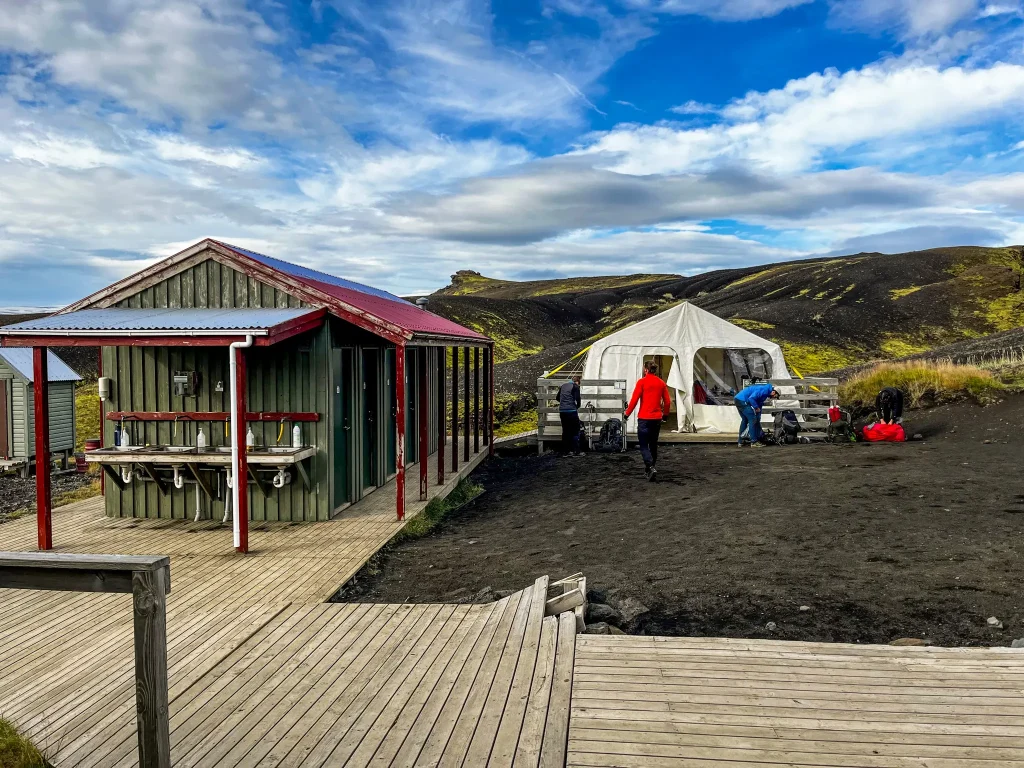
Huts
Facilities include:
- Prices: 17,000 ISK
- Dorm-style indoor sleeping accommodations
- Shared dining area and kitchen with gas stoves, pots, pans, and utensils
- Toilets and cold running water
- No electrical outlets for charging devices
Important to know:
- No linens or food are provided
- You must bring your own sleeping bag, pillow, and meals
Campground
Campground facilities and rules:
- Price: approx. 3,400 ISK per night
- Booking Procedure: Book online at Fi.is. Check in with the warden before setting up your tent.
- Campers cannot use hut kitchens or indoor hut facilities
- Outdoor tables and benches are available at most locations
Cooking and shelter:
- Landmannalaugar, Hrafntinnusker, Emstrur, and Þórsmörk have shared shelters or common tents for cooking and eating
- Campers must bring all of their own cooking gear
Camping layout:
- Campgrounds are open tenting areas
- There are no individually designated camping sites
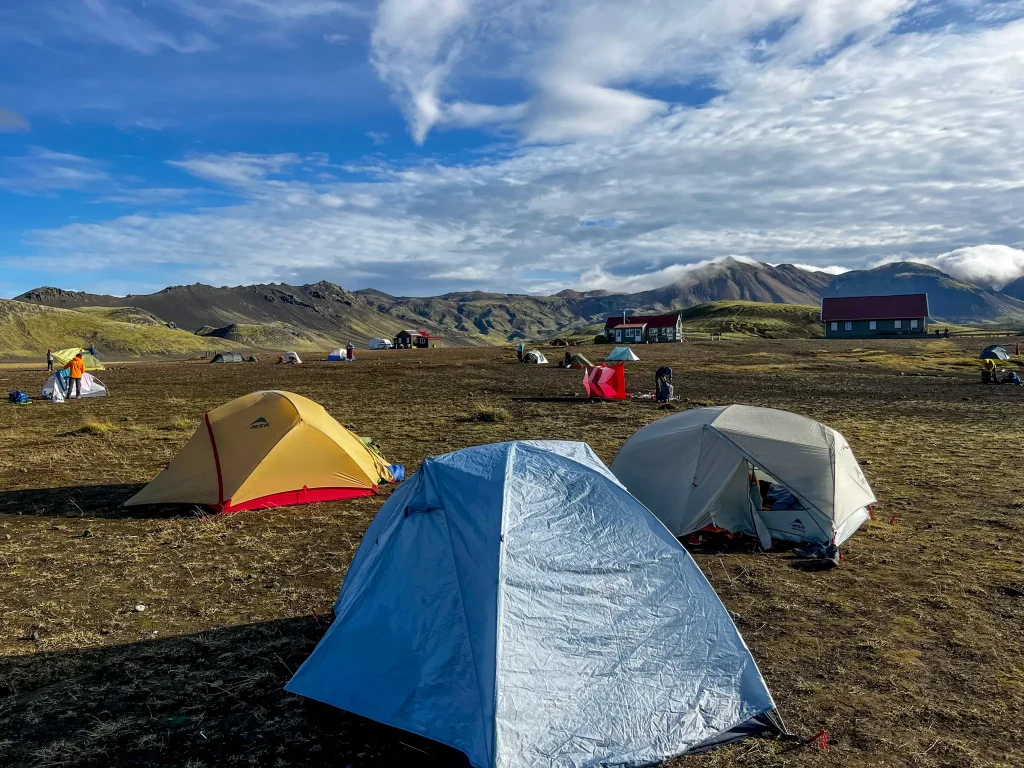
General Campground Notes
- Two of the most exposed stops on Laugavegur are Hrafntinnusker and Álftavatn — if you’re unsure of conditions, a hut stay there can offer peace of mind ( but these must be booked months on advance).
- While campsites are generally safe, exposure to the elements cannot be underestimated— strong winds and storms can strike at any time.
- Landmannalaugar has a hot spring used by campers, hut hikers, and day use visitors
Booking & Reservations: What You Need to Know
How you book accommodation on the Laugavegur — and how locked in those bookings become — plays a major role in choosing between huts and camping. Reservation requirements, availability, and cancellation terms all affect how much flexibility you’ll have once you’re on the trail. Understanding these pieces up front makes it easier to plan with confidence and avoid surprises later.
For us camping was the clear choice- we wanted the flexibility and the savings that came from choosing camping over huts.
Reservations
All accommodations on the Laugavegur are booked through the same system, whether you’re staying in huts, camping, or combining both. Reservations are now expected to be made before starting the hike.
- Reservations are managed by Ferðafélag Íslands (FI)
- You book by date and hut area, then choose either a hut bed or the campground at each location
- Hut beds are limited and highly competitive- selling out months in advance
- Campgrounds have more capacity, but advance booking is still expected
Cancellation & Flexibility
Cancellation policy is one of the biggest factors separating huts and camping on the Laugavegur. The terms below are current at the time of writing and are set by Ferðafélag Íslands (FI).
Hut Cancellation Policy
- 56 days or more before arrival: 75% refund of the accommodation fee
- 55–21 days before arrival: 50% refund of the accommodation fee
- 20–0 days before arrival: No refund
Hut bookings are date-specific and capacity-limited, which makes them the least flexible option once your plans are set.
Camping Cancellation Policy
- 2 days or more before the first booked date: Full refund
- 1 day before or on the first booked date: No refund
- Reservations can be transferred between campsites after the hike is started
Camping reservations are also date-specific, but the shorter cancellation window makes them significantly more flexible leading up to the trip. That flexibility can matter if you’re unsure whether you’ll continue beyond Þórsmörk. For many hikers, the decision to add Fimmvörðuháls to the Laugavegur isn’t finalized until they’re on the ground, which makes cancellation terms especially relevant.
Important Conditions (Both Huts and Camping)
- No refunds are issued due to weather, natural events, delays, or no-shows. That makes arrival and departure planning especially important, since weather disruptions can affect bus schedules and trail access.
Plan Smarter.
Hike with Confidence.
🥾 Complete Laugavegur Planner
Laugavegur involves more than daily distance. Camps, weather, transport, and gear all factor in. The Complete Laugavegur Planner helps you organize it all and start the trail prepared.
Plan Smarter.
Hike with Confidence.
🥾 Complete Laugavegur Planner
Laugavegur involves more than daily distance. Camps, weather, transport, and gear all factor in. The Complete Laugavegur Planner helps you organize it all and start the trail prepared.
How This Choice Affects the Rest of Your Planning
Your accommodation choice quietly shapes how you deal with weather on the trail, especially over several consecutive days. Weather on the Laugavegur is notoriously unpredictable for high winds and heavy rain, which makes having a layering system that works together, especially important over consecutive days.
- Packing: Camping means carrying gear that still has to work when it’s wet. Extra layers, reliable rain protection, and a sleep system that can handle damp conditions often matter more than shaving grams. A well-planned Laugavegur packing list becomes especially important when you’re responsible for your own shelter and weather protection.
- You can also use the free Laugavegur packing checklist to double-check your gear before departure.
- Mental load: Huts offer a guaranteed place to dry out and reset. Camping requires more decision-making in poor weather, especially when rain, wind, or cold linger for days. Understanding how demanding the Laugavegur can feel between huts and tents.
This is often why hikers don’t decide on huts or camping in isolation. They decide based on how much structure — and how much flexibility — they want across the entire hike.
Pack smarter. Hit the trail prepared.
🥾 Free Laugavegur Packing List– Download
This free packing list is full of practical tips to make planning your Laugavegur hike easier. It includes backpacking essentials, gear recommendations, packing, Iceland, and backpacking tips, and more to have you trail ready and confident.
Download the checklist and pack with confidence.

Final Thoughts on Camping on the Laugavegur
Choosing between huts and camping on the Laugavegur isn’t about finding the “right” answer. It’s about understanding how each option fits your pace, your comfort level, and how you want to handle uncertainty on the trail.
Once you know how accommodation, weather, reservations, and flexibility intersect, the decision tends to settle more naturally. Planning becomes less about second-guessing and more about preparing well for the experience ahead.
Small adjustments — from how early you start to how you organize your pack — can shape how smoothly the days unfold. Practical Laugavegur trail tips like these often make the difference between simply finishing and feeling prepared along the way.
The Laugavegur is a demanding trail, but it’s also a generous one. With a bit of clarity up front, you can step into it with confidence, knowing you’ve made thoughtful choices that support the journey — and leave room to appreciate the landscapes, the quiet moments, and the gift of being able to walk through such a remarkable place.