
The Numbers Behind the Trail
The Laugavegur is unforgettable. But before the views and volcanic ridges come budgets, bookings, and real financial decisions that impact your actual Laugavegur trail costs.
Iceland has a reputation for being expensive, and in many ways that reputation is earned. But the cost of hiking the Laugavegur depends less on the Iceland prices or the trail itself and more on the choices you make before you ever step onto it.
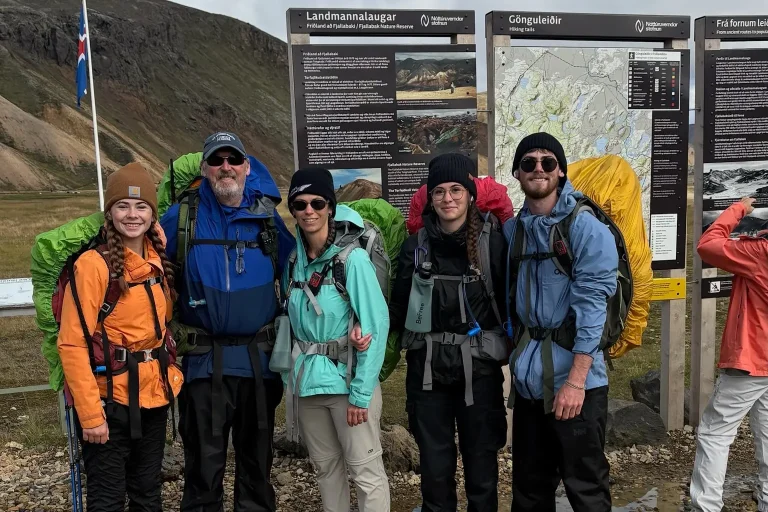
Personally, we hiked the Laugavegur Trail as part of a larger three week Iceland trip. From the beginning, we planned this as a true budget trek — camping, carrying our own gear, and limiting extras wherever possible. But that’s just one way to hike the trail.
In this guide, I’ll break down what it actually costs to hike the Laugavegur Trail — from accommodation and transportation to food, gear, and the optional Fimmvörðuháls extension. Whether you’re planning a hut-to-hut experience or a self-supported camping trip like ours, this will give you a realistic framework to budget with confidence.
Laugavegur Planning at a Glance
This planning overview is designed to help you organize the most important parts of your trip without overcomplicating things
Want everything organized in one place? Explore the Complete Laugavegur Planner.
Where to Stay the Night Before:
Trail Planning Resources:
Book Ahead:
- Rental Car/Shuttle- Discovercars
- Travel Insurance- Safety Wing
- eSIM- Saily
Some links on this page are affiliate links, which may earn us a small commission at no extra cost to you. We only recommend what we genuinely use or trust. Thank you for supporting our blog.
How Much Does It Cost to Hike the Laugavegur Trail?
If you’re still exploring the route itself, you can start with my complete Laugavegur Trail guide hub, where I’ve organized every post in this series — from logistics and transportation to packing and trail difficulty.
But if you’re here to figure out numbers, let’s break it down clearly.
For most self-guided hikers, the cost to hike the Laugavegur Trail falls somewhere between $450–$1,300 USD (~$610–$1,755 CAD) per person, not including international airfare. The exact cost will depend on a series of choices made before arriving in Iceland.
The biggest cost drivers are:
- Accommodation style (camping or huts)
- How many nights you take
- Your food strategy
- Whether you already own your gear
To give you real numbers, here’s what the fixed costs look like for the full Laugavegur plus Fimmvörðuháls route over six nights:
- 6 nights camping + Highland hiker’s bus pass: $389 USD (~$525 CAD)
- 6 nights in huts + Highland hiker’s bus pass: $1,055 USD (~$1,425 CAD)
That’s roughly a $650 USD (~$900 CAD) difference per person — before adding food.
We completed the entire route — including Fimmvörðuháls — in four days. Fewer nights lowered our accommodation costs significantly, but it also meant we had some long hiking days.
🥾 Free Laugavegur Budget Planner
Plan Your Budget With Your Actual Numbers
If you want to see what your specific trip will cost, download my free Laugavegur Budget Planner, and plug in your own details.
It allows you to:
- Enter your actual hut or campsite nights
- Choose your transportation method
- Add your real grocery estimates
- Select the currency each expense is paid in
- Split costs between hikers
- See your total automatically calculated
Instead of estimating from someone else’s trip, you can adjust the numbers to match your own plan — and see how changes affect your total immediately.
Laugavegur Trail Cost at a Glance
(Per Person, Self-Guided)
| Style | 4–6 Nights Estimated Total |
|---|---|
| Budget Camping | $450–$750 USD (~$610–$1,015 CAD) |
| Hut-to-Hut | $850–$1,200 USD (~$1,150–$1,620 CAD) |
These estimates assume:
- Self-guided (not part of a tour)
- Bus transportation
- Moderate grocery spending in Iceland
- No major new gear purchases or rentals
If you’re still deciding between camping and huts, my detailed guides on camping vs huts on the Laugavegur and the complete Laugavegur Packing List break down what each style involves.
Trail Costs vs. Gear Costs: What’s Included?
The estimates above reflect trail-related expenses only — accommodation, transportation, and food.
Gear is separate.
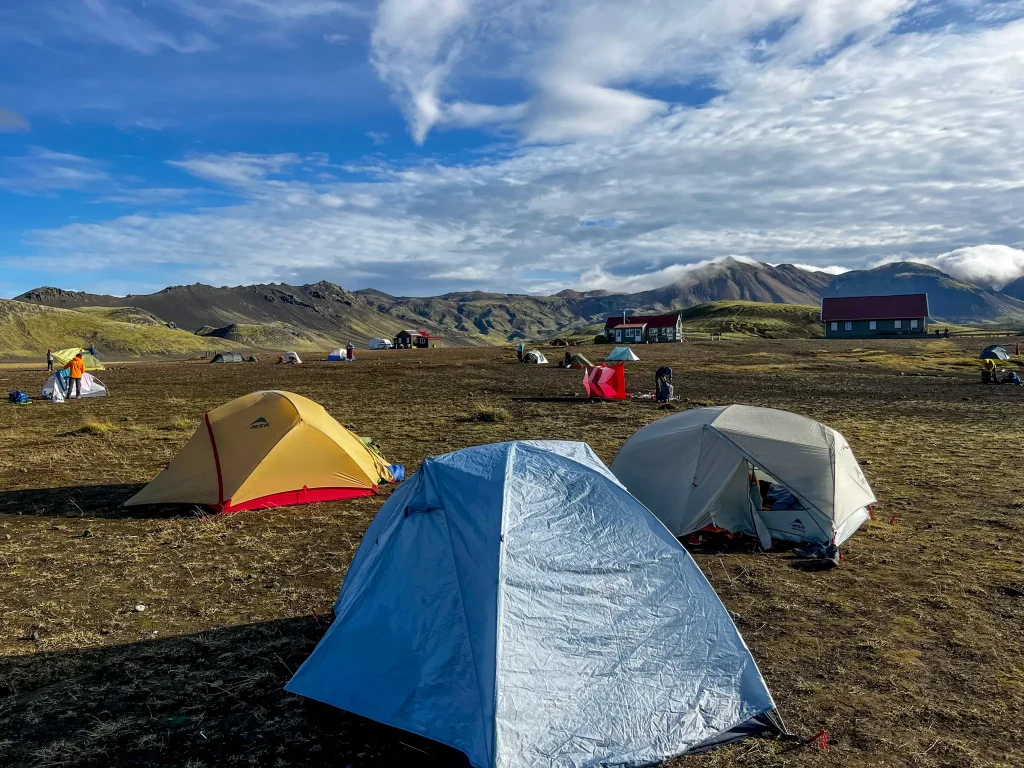
If you already backpack regularly and own the essentials — tent, backpack, sleeping system, rain gear — your additional gear cost may be minimal.
Renting Gear in Iceland
If you need to rent equipment in Iceland, your total investment can increase quickly.
Typical rental pricing:
- Tent rental: $20–$40 USD per day (~$27–$54 CAD)
- Sleeping bag rental: $15–$25 USD per day (~$20–$34 CAD)
- Full camping gear package: $50–$100 USD per day (~$68–$135 CAD)
Over 4–6 days, rentals alone can add $200–$600 USD (~$270–$810 CAD).
For us, we brought all of our own gear from home. That kept our trail-specific expenses close to the lower end of the range.
If you’re unsure what’s essential versus optional, I break down everything you need with top picks, budget alternatives, and pro tips — in my complete Laugavegur packing list.
Purchasing Gear
If you’re building a backpacking kit from scratch, upfront costs can vary widely depending on quality and brand.
Major items typically include:
- Backpack
- Tent
- Sleeping bag
- Sleeping pad
- Waterproof outer layers
This can range from a few hundred dollars to well over $1,000 USD, depending on what you already own and how light you want your set up to be.
For the Laugavegur specifically, weather protection matters more than brand names. Investing in proper rain gear and understanding how to layer effectively in wind, rain, and cold conditions is far more important than shaving a few ounces off your pack weight.
If layering feels confusing, I walk through how I layer for hiking in changing conditions here.
Purchased gear can feel expensive upfront, but if you plan to hike again — whether in Iceland or elsewhere — it becomes a long-term investment rather than a one-time expense.
Laugavegur Cost Breakdown by Category
Accommodation Costs
Accommodation is the single largest factor in your Laugavegur budget.
On this trail, you’re choosing between:
- Mountain huts
- Campgrounds beside each hut
Both follow the same route. The difference is comfort, convenience, and cost.
Pre- and Post-Trail Accommodation
Most hikers spend at least one night in Reykjavík before or after the trail.
Accommodation costs vary widely depending on your travel style, room type, and time of year.
Shared hostel rooms may start around:
- $50–$110 USD per night (~$70–$145 CAD)
- 👉 View Reykjavik Dalur Eco Hostel– Close to the bus pick up point
Private hostel rooms generally range from:
- $150–$220 USD (~$200–$300 CAD)
- 👉 Browse private hostel rooms on Hostelworld
Guesthouses, apartments, and hotels often range from:
- $200–$300+ USD (~$270–$405+ CAD)
To compare a broader range of guesthouses, apartments, and hotels across Reykjavík, you can browse availability here. Enter your dates and number of people to find accommodations suited to your group.
Summer availability fills quickly, and prices fluctuate based on demand.
If the Laugavegur is part of a larger Iceland itinerary, this may already be built into your overall trip budget. If you’re flying in specifically for the trek, it’s worth factoring in at least one additional night.
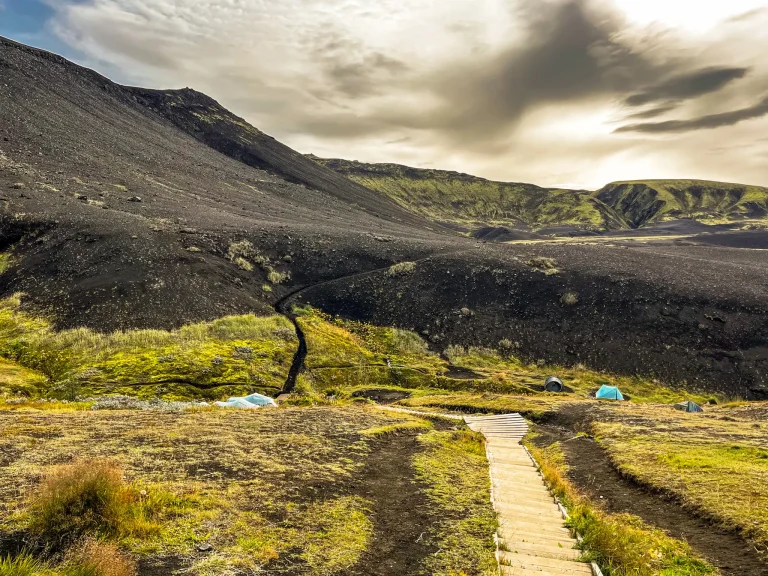
Camping Costs
Every campground along the Laugavegur charges the same nightly fee:
- 3,400 ISK per person, per night
- (~$28 USD / ~$38 CAD)
Over 4–6 nights, that typically totals:
- $112–$168 USD (~$152–$228 CAD)
Camping keeps accommodation costs predictable and relatively low. The trade-off is carrying your full sleep and cook systems — and managing weather exposure.
If you’re considering camping, I break down what it’s actually like — from wind to shared facilities — in my detailed guide to Camping on the Laugavegur.
Camping with Rental Gear
If you need to rent gear, camping is still typically still less expensive than staying in huts — the savings just aren’t as dramatic.
If you already own your backpacking setup, camping is clearly the most budget-friendly option. If you don’t, it helps to compare both scenarios using your actual itinerary and group size before deciding. The free budget planner will help you crunch the numbers if you’re wondering how gear rentals change the equation.
Hut Costs
Mountain huts offer:
- Bunk-style sleeping
- Shared kitchen facilities
- Indoor shelter from wind and rain
- A lighter pack (no tent required)
Current hut pricing on the Laugavegur:
- 17,000 ISK per night
- (~$125 USD / ~$170 CAD)
Over 4–6 nights, that typically totals:
- $500–$750 USD (~$680–$1,020 CAD)
That’s before transportation, food, showers, or any additional accommodation at the beginning or end of the trek.
Huts reduce pack weight and increase comfort — especially in sustained wind or rain — but they significantly raise your total trail cost compared to camping.
Transportation Costs
Transportation is one of the more fixed expenses on the Laugavegur — but how you handle it depends on the type of Iceland trip you’re planning.
There are two primary approaches:
- The Highland hiker’s bus pass
- Renting a vehicle and coordinating a shuttle
Highland Hiker’s Bus Pass
For hikers focusing primarily on the Laugavegur — or those who don’t want to rent a vehicle — the Highland bus pass is the simplest solution.
It includes:
- Bus from Reykjavík to Landmannalaugar
- Pickup from Þórsmörk or Skógar at the end of your hike
Current pricing:
- 27,900 ISK
- (~$205 USD / ~$275 CAD)
The bus is straightforward, removes the need to coordinate parking, and works especially well if the Laugavegur is the main focus of your Iceland trip.
If you’re not planning to explore beyond the trail, this is often the most efficient option.
Car Rental + Shuttle Coordination
If you’re combining the Laugavegur with a broader Iceland itinerary — as we did — renting a vehicle can make more sense.
However, the logistics depend on the type of vehicle you rent.
Non-4×4 Vehicle
Standard vehicles are not permitted on Iceland’s F-roads.
In this case, you would:
- Drive to Hella
- Park
- Take a highland bus to Landmannalaugar
- Shuttle back to retrieve your car
4×4 Vehicle
With a 4×4, you can legally drive to Landmannalaugar via F-roads (road conditions permitting).
Your options then become:
- Drive to the trailhead
- Hike one direction
- Take a shuttle at the end to retrieve your vehicle
This provides maximum flexibility but increases rental cost significantly.
🚗 Car Rental
When comparing car rentals, I typically check both DiscoverCars and Expedia to see which one has the better pricing for my dates.
Additional Car Rental Expenses
Renting a vehicle also comes with expenses beyond the base rental rate. Insurance upgrades, fuel, and potential parking fees can increase your total more than expected — especially during peak season.
Which Option Is More Budget-Friendly?
If the Laugavegur is your only focus, the Highland bus pass is usually the most straightforward and predictable option.
If you’re already renting a vehicle for a longer Iceland trip, integrating the trail into your itinerary may reduce overall travel costs — even if it requires more coordination.
Since transportation logistics can get surprisingly nuanced, I walk through each option step by step in my guide to planning transportation for the Laugavegur.
If you’re unsure which setup makes the most sense, plug both options into the Laugavegur Budget Planner and compare them side by side using your actual group size and travel dates. Seeing the numbers next to each other often makes the decision clearer.
Food Costs
After accommodation, food is the most flexible — and most underestimated — part of your Laugavegur budget.
Unlike huts and transportation, food costs vary widely depending on how you prepare.
There are four main approaches:
- Bring food from home
- Buy groceries in Reykjavík
- Purchase freeze-dried meals locally
- Buy meals at huts or restaurants along the trail
Each comes with a very different price tag.
Bringing Food From Home
We brought most of our trail food from home, which significantly reduced our overall cost.
However, it’s important to understand Iceland’s food import regulations before doing this.
Iceland has restrictions on bringing meat and dairy products into the country if you are not coming from another Shengen country. Furthermore, products must be in unopened consumer packaging with a description of the contents (list of ingredients). While some travellers report not being questioned about packaged foods, that does not mean restrictions don’t apply.
Shelf-stable, commercially packaged snacks are typically the safest option.
Examples include:
- Protein bars
- Trail mix
- Instant oatmeal
- tortillas
- Electrolyte mixes
- Dehydrated vegetarian meals
Avoid bringing:
- Fresh meat
- Cheese
- Milk products
- Homemade items
Regulations can change, so it’s wise to check official Icelandic customs guidelines before departure.
By packing permitted, shelf-stable foods, we kept our grocery spending in Iceland minimal and our overall trail cost closer to the lower end of the range.
Buying Groceries in Iceland
Icelandic grocery prices are higher than many hikers expect.
Basic trail foods like tortillas, cheese, oatmeal, trail mix, and energy bars cost noticeably more than in North America.
For a 4–6 day trek, most hikers can expect to spend approximately:
- $80–$150 USD (~$110–$205 CAD)
That estimate increases quickly if you rely on specialty hiking foods purchased locally.
Freeze-Dried Meals in Iceland
If you plan to purchase freeze-dried meals in Reykjavík or near the trail, expect to pay:
- $15–$25 USD per meal (~$20–$34 CAD)
Over multiple days, that adds up quickly. For a 5-day trek with two hot meals per day, freeze-dried meals alone can exceed:
- $150–$250 USD (~$205–$340 CAD)
Buying Meals on the Trail
Some huts along the route offer prepared meals.
Álftavatn and Volcano Huts in Þórsmörk both have restaurants where hikers can purchase hot meals, snacks, and drinks.
Expect to pay approximately:
- $30–$50 USD per meal (~$40–$68 CAD)
Whether you’re camping or staying in huts, purchasing a meal on the trail means one less meal you need to carry. That can slightly reduce pack weight, simplify your food planning, and give a morale boost, but it comes with a solid price bump.
The Real Budget Lever
Food is your biggest variable cost.
Choices like bringing snacks from home, buying groceries locally, or enjoying a restaurant meal along the trail will shift your total in different ways.
If your budget allows for a hot meal at a hut restaurant, it can be a memorable and welcome part of the experience — and a way to support the people operating in Iceland’s highlands. The key is simply planning for the choices that fit your budget, so they feel intentional rather than surprising.
If you’re comparing food strategies, this is another area where using the Laugavegur Budget Planner with your actual numbers can clarify the difference.
Hidden Costs Most Hikers Forget
Once accommodation, transportation, and food are accounted for, most of your major expenses are predictable. But there are a few smaller costs that often catch hikers off guard.
None of these are dramatic on their own — but together, they can shift your total.
Showers at Campsites
Showers at huts and campsites are not included in your overnight fee.
Expect to pay approximately:
- 1100 ISK per shower
- (~$9 USD / ~$12 CAD)
If you shower multiple times over several days, that can quietly add up.
Checked Baggage Fees
If you’re bringing backpacking gear from home, especially trekking poles or stove components, you may need to check a bag.
Depending on your airline, that can cost:
- $30–$75 USD each way
- (~$40–$100 CAD)
For some travelers, baggage fees are part of the overall trail cost.
Fuel Canisters
If you’re flying internationally, you cannot bring stove fuel.
Fuel must be purchased in Iceland, typically in Reykjavík before heading to the trail.
Expect to pay approximately:
- $10–$20 USD (~$14–$27 CAD) per canister, depending on size.
Credit Card Foreign Transaction Fees
If your credit card charges foreign transaction fees (often around 2–3%), that small percentage applies to every hut booking, bus ticket, and grocery purchase.
On a $1,000 total, that could mean an additional:
- $20–$30
It’s minor — but worth being aware of.
Is the Laugavegur Worth the Cost?
Everybody’s heard that Iceland is expensive. Absolutely true.
And the Laugavegur isn’t the cheapest multi-day hike in the world.But cost alone doesn’t tell the full story.
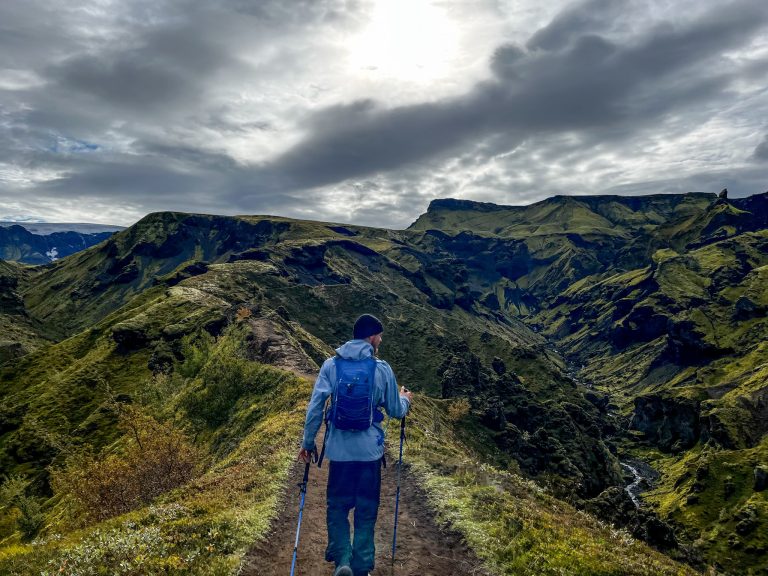
The trail moves through geothermal valleys, obsidian fields, moss-covered ridges, black sand deserts, and glacier-fed rivers — often all within the same day. Few trails offer that level of diversity over such a manageable distance, which is part of what makes the Laugavegur so popular.
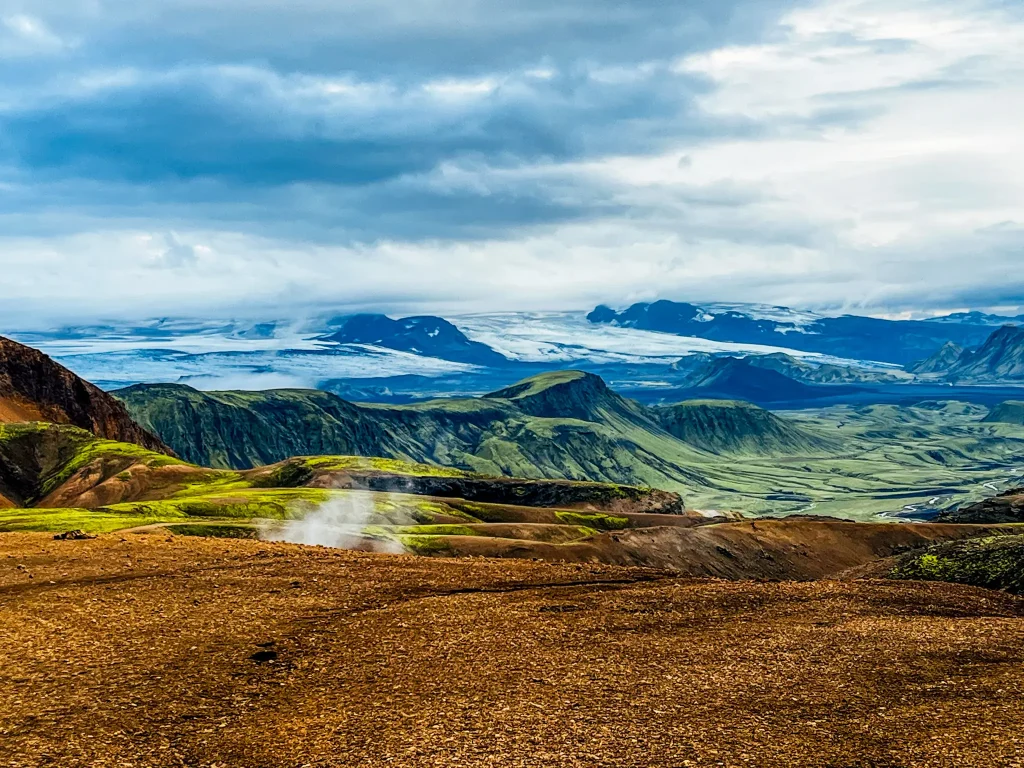
But, what makes this route compelling isn’t just the landscape — it’s the flexibility.
You can:
- Camp and carry everything yourself
- Stay hut-to-hut for more comfort
- Move quickly over four days
- Take your time over six
- End at Þórsmörk
- Or continue across Fimmvörðuháls
If you’re weighing that final decision, deciding whether to add Fimmvörðuháls often comes down to time, energy, and what kind of ending you want.
There isn’t one correct way to hike the Laugavegur. It can be ultra-budget. It can be comfort-focused. It can be fast. It can be slow.
The trail remains the same.
The experience shifts based on your choices.
Final Thoughts on Laugavegur Trail Costs
Cost is one part of planning the Laugavegur — but it isn’t the defining part.
Once you understand where your money goes, the decisions become clearer. You’re no longer reacting to price tags. You’re choosing what kind of experience you want to have.
For some, that means carrying everything and keeping it simple. For others, it means lighter packs and warm meals along the way. Neither approach is more “right” — they’re simply different ways of walking the same landscape.
If you’d like to map out your full trip — budgeting, packing, transportation timing, reservations, and daily planning — the Complete Laugavegur Planner brings everything together in one place.
The Laugavegur doesn’t require perfection. It requires preparation.
Ultimately, being able to walk through Iceland’s highlands at all is something many of us don’t take lightly. It’s a privilege to spend days moving through that kind of landscape — crossing rivers, watching the weather shift, and ending each night somewhere new.
When you take the time to map out accommodation, transportation, food, and gear ahead of time, the financial side stops feeling uncertain. It becomes another element of the plan — steady, intentional, and manageable.
If you’d like to run your own numbers and see how small changes affect your total, the Laugavegur Budget Planner can help you plan with confidence.
The rest is simply showing up, prepared and grateful.