
Understanding the Real Challenge Behind the Beauty
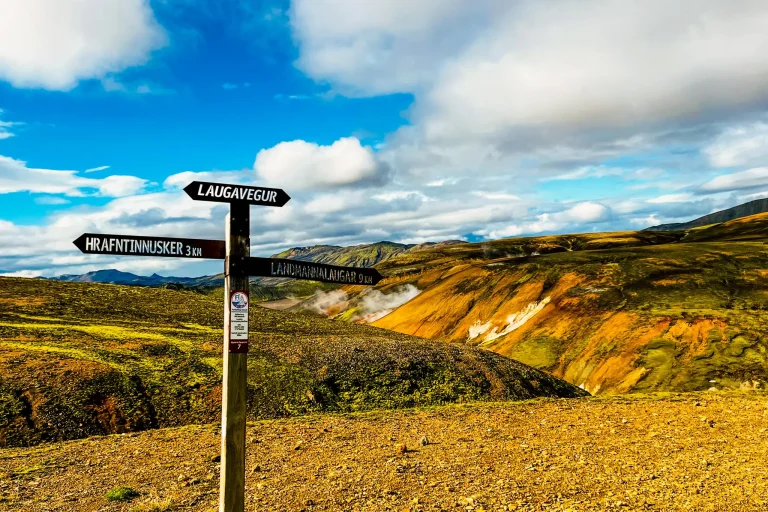
The photos make it look surreal.
The weather can make it feel relentless.
So how hard is the Laugavegur Trail — really?
When I first started seeing the iconic Laugavegur Trail pop up in my feed, I didn’t feel inspired. I felt intimidated. It looked wild and exposed and far beyond what we were doing at the time. I skipped past it more than once without giving it a second thought.
But it kept resurfacing. And each time it did, it edged a little higher on my list. At that point, I didn’t even know what made the Laugavegur so popular — I just knew it looked dramatic and exposed and far longer and more serious than anything we’d done before.
Once we had a few backpacking trails under our belts — and some lessons learned on the trail — I started thinking maybe, just maybe. . .
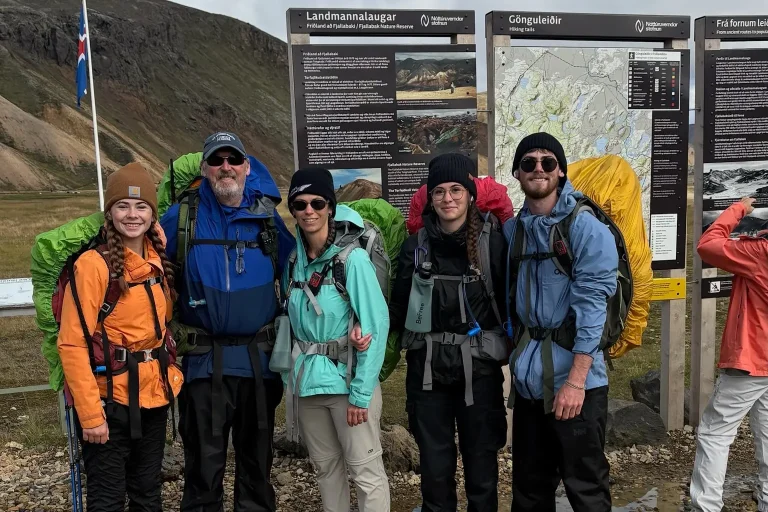
Joshua was immediately in. Craig and Sarah had serious doubts. The rest of the group took the cautious “we’re in if everyone else is” approach.
That’s when it stopped being a dreamy Iceland idea and became a real question:
How hard is the Laugavegur, and is it actually right for us?
The Laugavegur isn’t extreme. It’s not technical. It’s not high altitude. But that doesn’t make it easy. Whether it feels manageable or overwhelming depends far more on preparation than on the trail itself.
Preparation in training. Preparation in gear. And preparation in mindset.
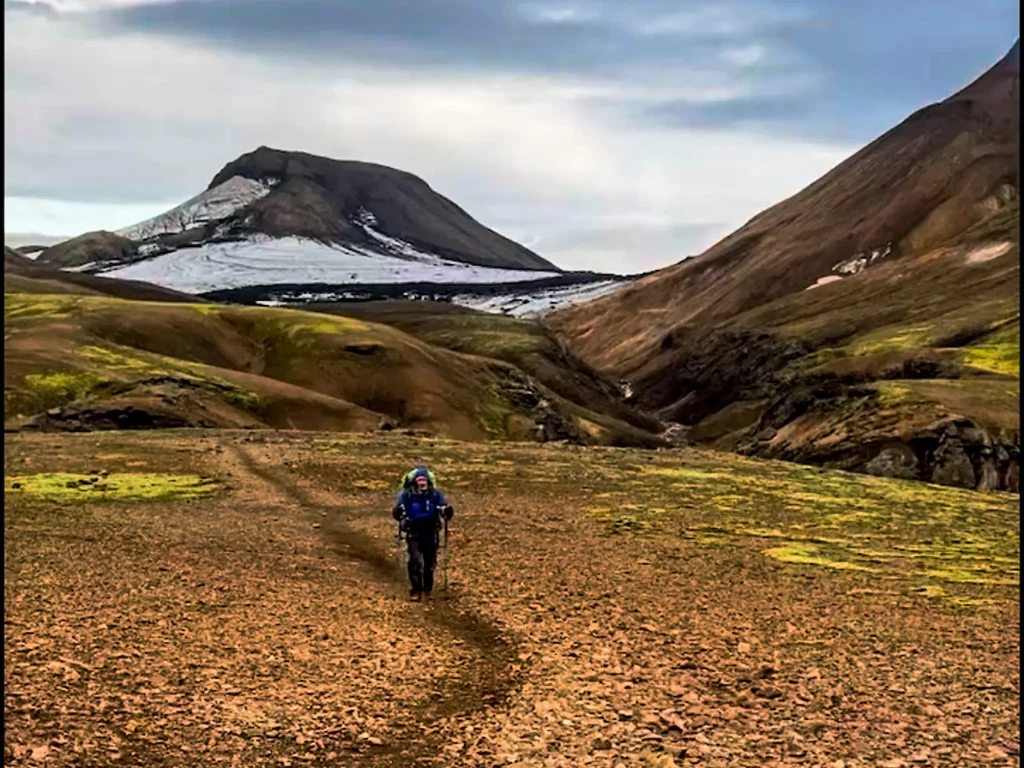
We had learned what happens when you underestimate weather, skip elevation training, or rely on gear that doesn’t fit properly. This time, we wanted to be ready — not just physically, but mentally — for whatever Iceland decided to hand us.
Laugavegur Planning at a Glance
This planning overview is designed to help you organize the most important parts of your trip without overcomplicating things
Want everything organized in one place? Explore the Complete Laugavegur Planner.
Where to Stay the Night Before:
Trail Planning Resources:
Book Ahead:
- Rental Car/Shuttle- Discovercars
- Travel Insurance- Safety Wing
- eSIM- Saily
TL;DR: How Hard Is the Laugavegur, Really?
Laugavegur Trail
Distance: 55 km (34 mi)
Elevation gain: 1838 m (~6500 ft)
Time needed: 3-4 days
Difficulty: Moderate to moderately challenging
Trail type: Point to Point
Access notes: Trailhead is at Landmannlaugar,
requiring 4×4 or highland bus to access
Parking Fees: 1200 ISK
AllTrails Map
On paper, the numbers don’t look overwhelming. The distance is manageable. The elevation isn’t extreme. There’s no technical scrambling or exposed ridgelines.
But statistics don’t capture the trail’s biggest challenge
What makes the Laugavegur challenging is the conditions — and how they layer on top of everything else.
Weather & Exposure: The Real Challenge
The biggest unknown on the entire combined Laugavegur and Fimmvörðuháls trail isn’t the distance or the elevation- it’s the weather.
We were fortunate. For most of our time on the Laugavegur, the conditions were better than expected — cool, occasionally windy, and sometimes even enjoyable. The real storm hit later on Fimmvörðuháls. But that didn’t change the reality that the entire route runs through exposed highland terrain, well above tree line, with very little natural shelter.
Even in mid-summer, daytime temperatures often sit in the single digits Celsius (40s°F). Gusting winds (60-80 km/h), horizontal rain, and heavy fog are regular realities. Fog can roll in with little warning, reducing visibility across wide, open valleys, and snowfields often remain well into July.
You can look at the mileage.
You can calculate the elevation gain.
But you can’t predict the conditions that four consecutive days in Iceland’s highlands will deliver.
And that uncertainty is what can make this trail feel daunting before you even start. It was my primary anxiety point before we left.
Even in good weather, you’re aware of how open the landscape is — long stretches without cover, wide valleys, ridgelines where wind has nothing to slow it down. If conditions turn, you’re in it.
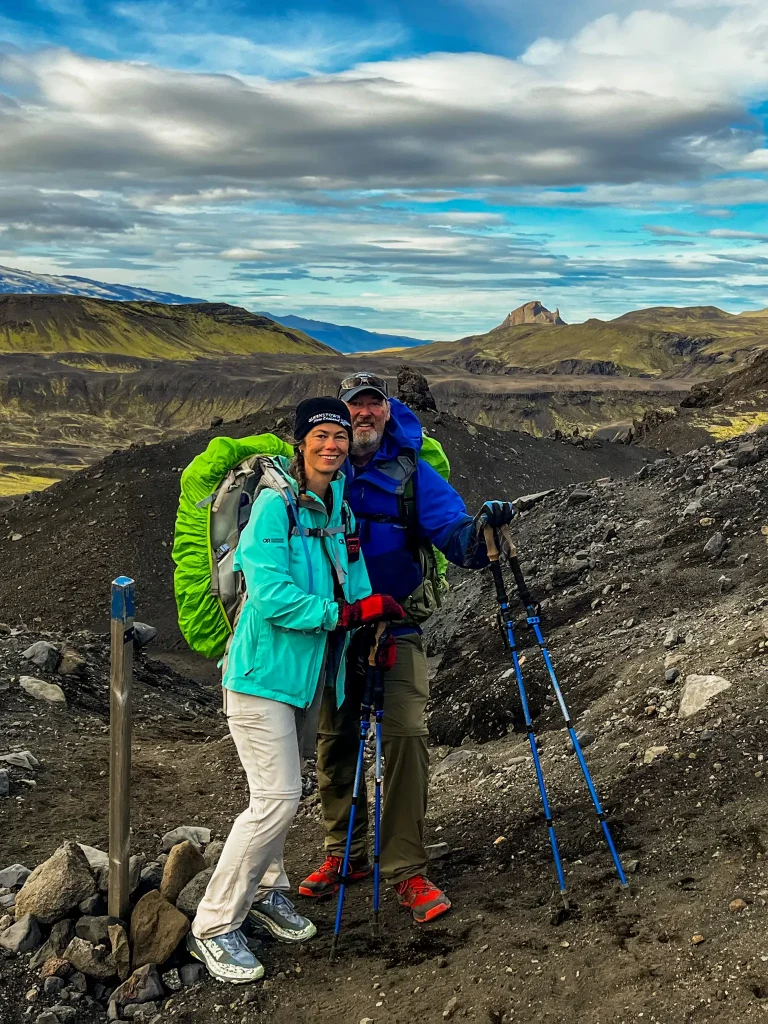
We hoped for the best, but planned for the worst. Our biggest investment before the hike was high quality layers that provided protection from wind, rain, and cold. The Tongariro Alpine Crossing in New Zealand taught us the importance of being prepared for alpine weather conditions. Our Laugavegur packing list details everything we packed to prepare for the Laugavegur weather.
The weather doesn’t make the Laugavegur extreme, but it does make it unpredictable, wild, raw, and worthy of respect and consideration.
Terrain & Trail Conditions
The Laugavegur Trail isn’t technical; it doesn’t have any ladders or scrambles, but it’s not effortless either.
Day one begins with a steady climb out of Landmannalaugar, gaining elevation quickly as you leave the geothermal valley behind. It’s not a scramble, but it’s a sustained ascent that immediately reminds you why training for elevation is helpful.
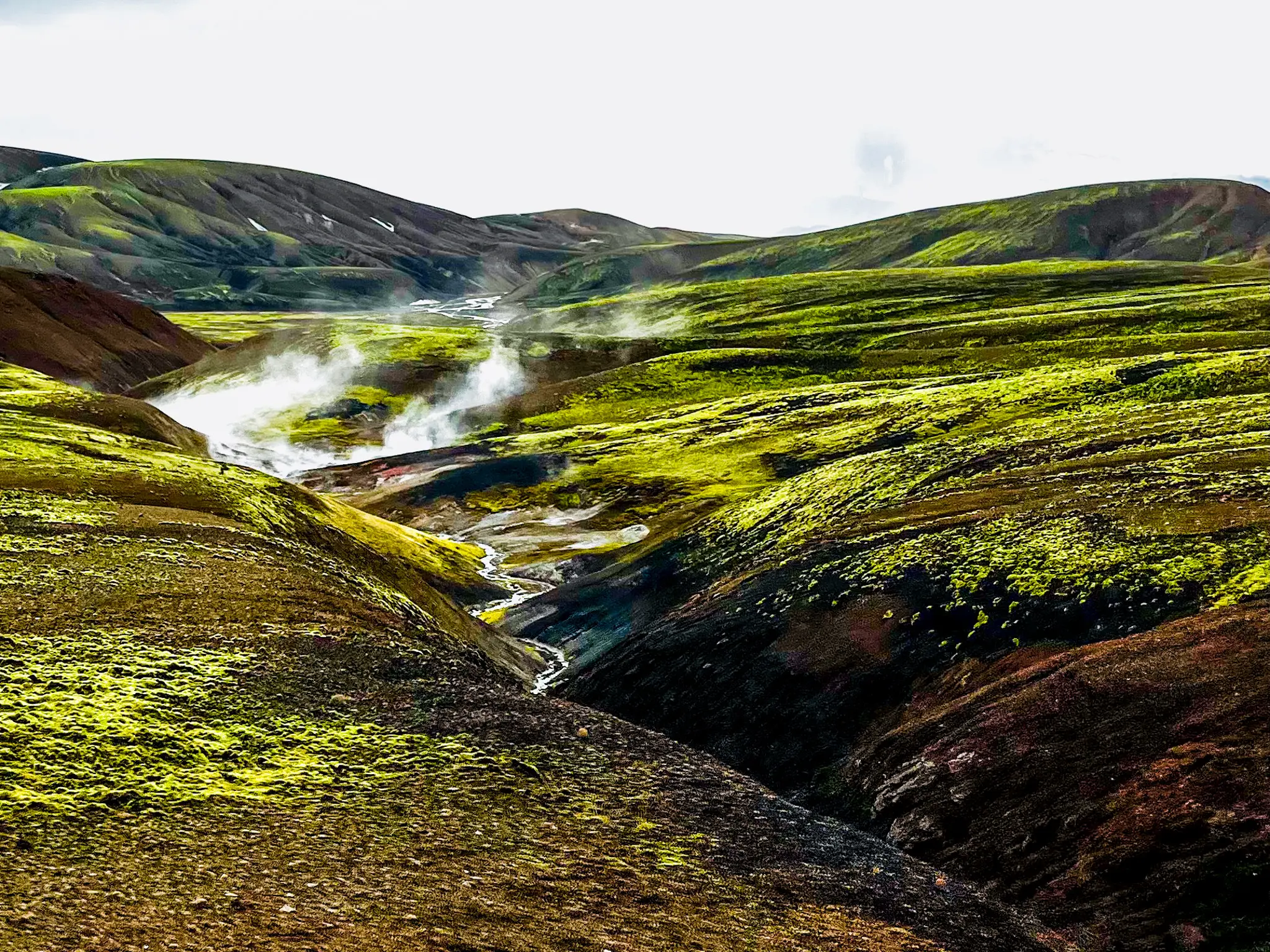
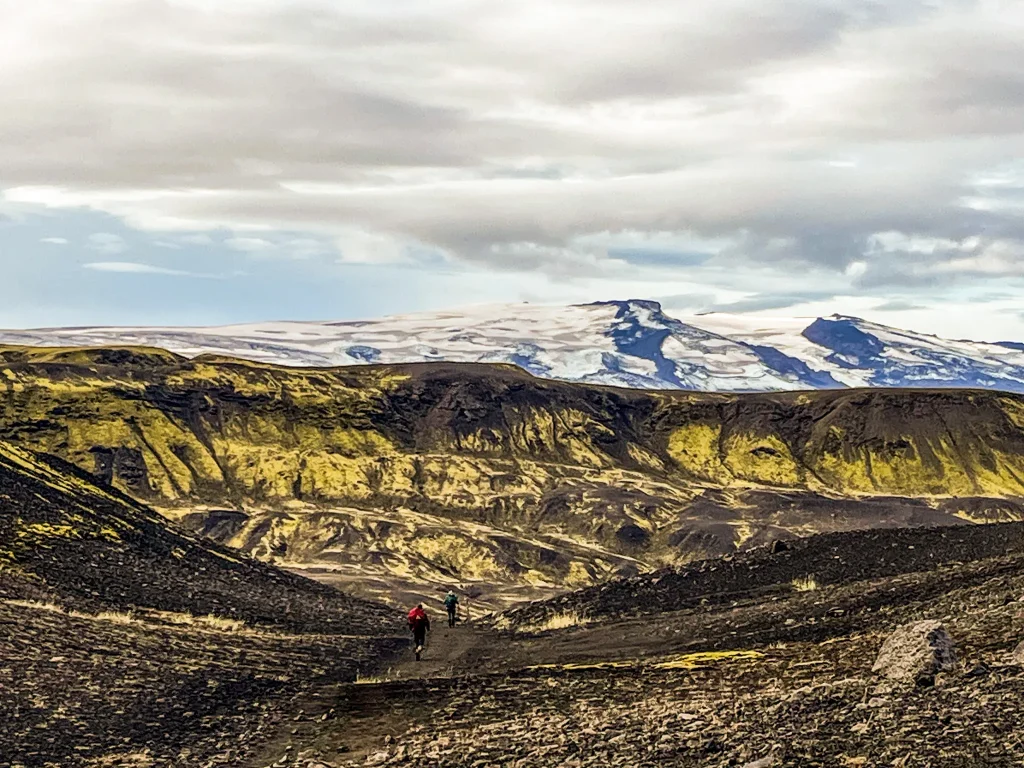
Much of the route crosses volcanic landscapes — black sand, loose gravel, rocky stretches, and hardened lava fields. In some sections, the footing feels stable and straightforward. In others, it shifts just enough to keep your stabilizing muscles engaged.

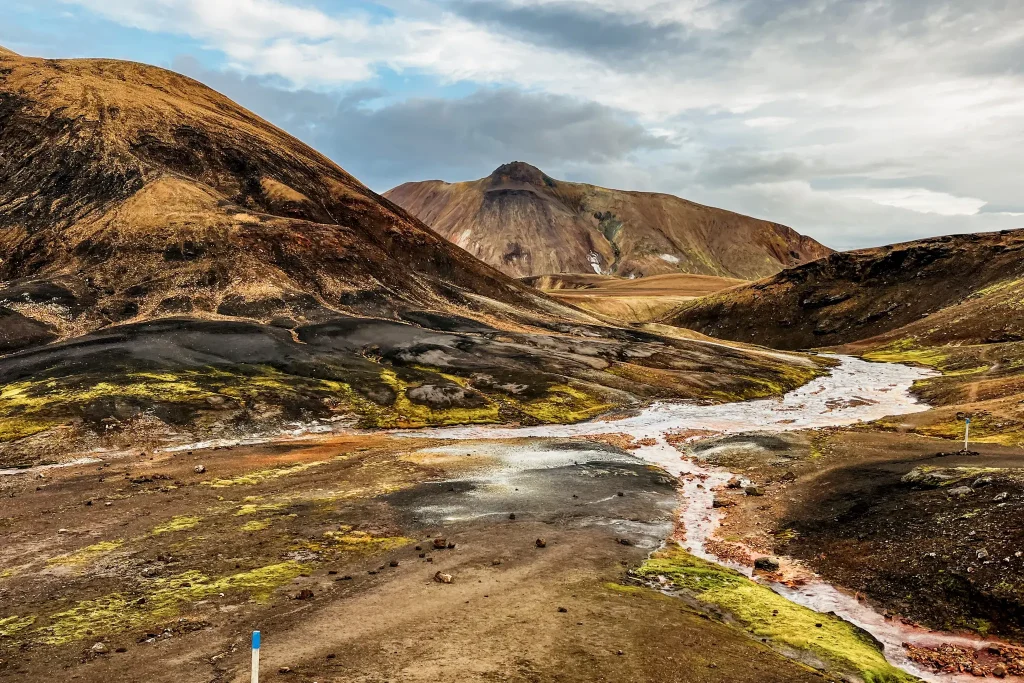
Snowfields often linger well into summer, particularly near Hrafntinnusker. Most are manageable, but they can be uneven or slick depending on conditions. River crossings range from simple step-overs to glacial, calf-deep (sometimes higher) wades where patience matters more than speed.
The stretch approaching Álftavatn includes a series of steep ups and downs before a long, sustained descent toward the lake. That final drop is significant — steep in sections, loose underfoot, and hard on tired legs. It’s not dangerous, but it is easy to misstep if you’re not attentive.
Jaimie hyperextended her leg before we reached the main descent and suffered a minor injury that plagued her for the rest of the hike. It caused her to finish in Þórsmörk and miss Fimmvörðuháls. So although this section is not extreme, it’s also not a place to rush.
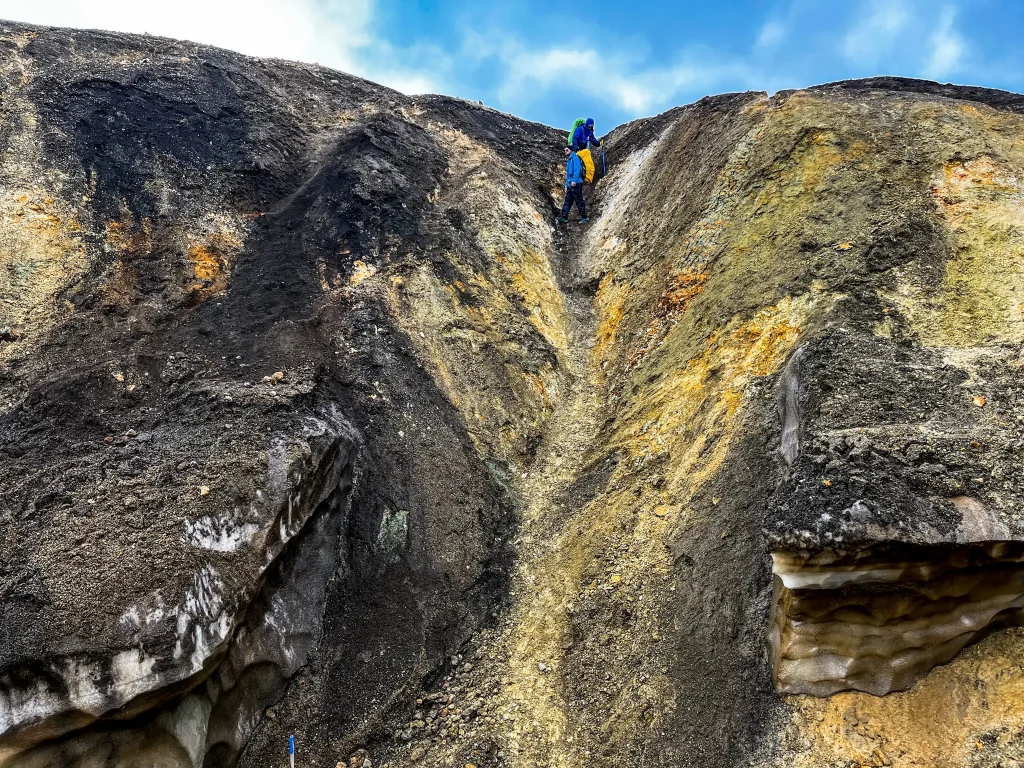
In terms of pure physical effort, the Laugavegur front-loads much of its challenge. The climb out of Landmannalaugar and the steep sections before Álftavatn demand strength and control. Beyond those early climbs and descents, the physical demands are steady but manageable — especially if the weather cooperates.
Is the Laugavegur Hard for Beginners?
The daily distances on the Laugavegur are generally between 12 and 15 kilometres. For many hikers, that’s manageable. The challenge isn’t extreme mileage — it’s completing those distances in exposed highland conditions over four consecutive days.
This isn’t a trek that requires years of experience. But it does require preparation.
Can comfortably hike 12–15 km in a day
- Have tested your boots, pack, and rain gear on longer hikes before arriving
- Are accustomed to carrying a fully loaded backpack
- Are prepared for wind and rain
- Can handle roughly 650 m of elevation gain on the first day
It may feel hard if you:
- Haven’t tested your gear on longer efforts
- Have never done a multi-day hike
- Tend to rush descents
- Feel unsettled in exposed conditions
- Are not mentally prepared for changing Icelandic weather
When It Becomes Significantly Harder: Adding Fimmvörðuháls
Fimmvörðuháls adds significant elevation gain, a long sustained climb, and extended exposure. If completed in a single push from Þórsmörk to Skógar, it can mean a 25+ km day with well over 1,000 metres of climbing in the first 6 kms. There’s no gradual easing into the summit — the effort is steady and sustained.
Weather matters even more here. The pass sits higher, is more exposed, and conditions can feel harsher than on the Laugavegur itself. We encountered our worst weather of the trip on Fimmvörðuháls — not on the Laugavegur.
If the Laugavegur feels moderately challenging, Fimmvörðuháls is a clear step up.
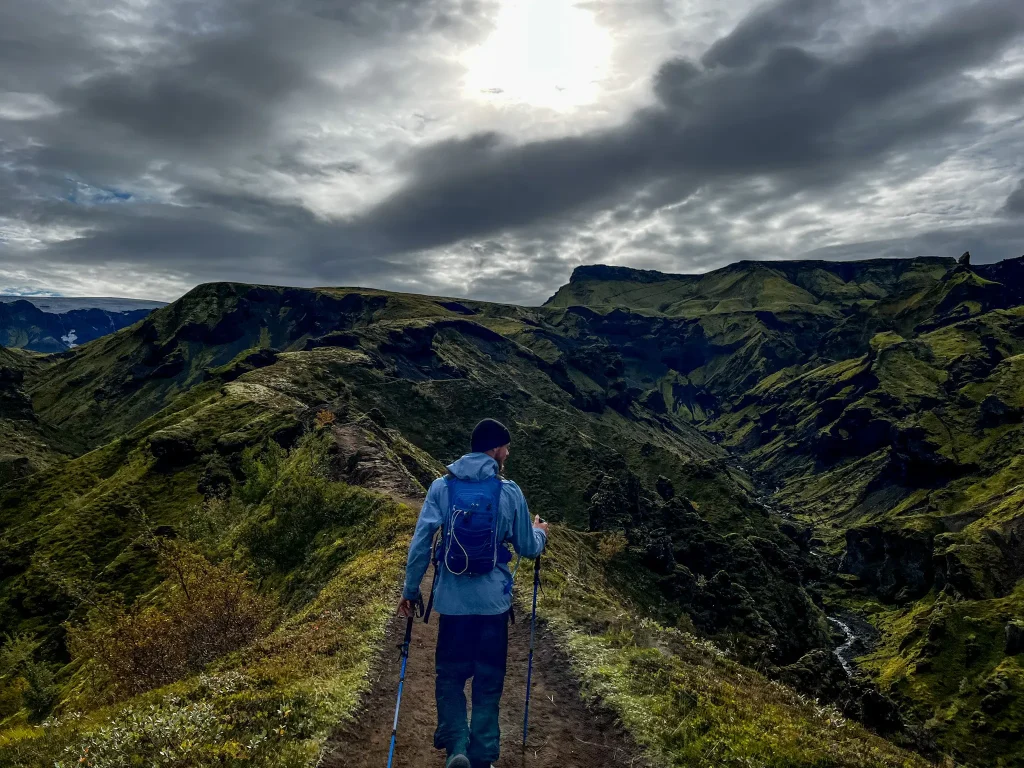
Whether you should add it depends on your fitness, weather tolerance, and overall itinerary — something I explore in Should I Add Fimmvörðuháls to the Laugavegur.
Adding Fimmvörðuháls doesn’t just extend the distance. It changes the difficulty profile of the entire trek.

Final Thoughts on How Hard Is the Laugavegur — Really?
The Laugavegur isn’t extreme. It isn’t technical. And the daily distances aren’t overwhelming.
What makes it hard is exposure — and the unpredictability that comes with hiking through Iceland’s highlands for four consecutive days. Weather, terrain, and fatigue layer together in ways that demand preparation and steady resolve.
If the weather cooperates, the trail feels demanding but manageable for a prepared hiker. Add Fimmvörðuháls, and the effort increases significantly.
When the weather doesn’t cooperate, the challenge becomes more mental. Wind tests your balance. Rain soaks the landscape. Visibility shrinks. Progress slows. Those are the moments that stretch you — not just physically, but inwardly.
And yet, even then, there is beauty.
Standing in those wide valleys, watching clouds sweep across rhyolite mountains, crossing rivers carved through ancient lava — you can’t help but stand in awe of God’s creative masterpiece. The scale. The colour. The quiet power woven into every ridge and valley. Landscapes like this reflect the handiwork of God — intricate, intentional, and far beyond anything we could design. To walk through it — in wind or sunshine — is a blessing.
We don’t choose trails like this because they are easy. We choose them because they shape us. Preparation builds confidence. Endurance builds resilience. To walk through it — in wind or sunshine — is a blessing.n control.
The Laugavegur is challenging. But it is also a reminder that not every blessing comes wrapped in comfort. Sometimes it arrives in wind and rain — and in the strength to keep walking anyway.