
One Trail, Two Very Different Endings
On paper, adding Fimmvörðuháls looks like “just one more day.” On the trail, it feels like a very different decision. If you’re wondering whether you should add Fimmvörðuháls to the Laugavegur, you’re not alone.
The infamous Laugavegur Trail ends in Þórsmörk, which makes finishing there a complete trek, not an early exit. Many hikers assume the trail naturally continues all the way to Skógafoss and that stopping earlier means leaving something unfinished. However that assumption may need to be reassessed once you reach Þórsmörk.
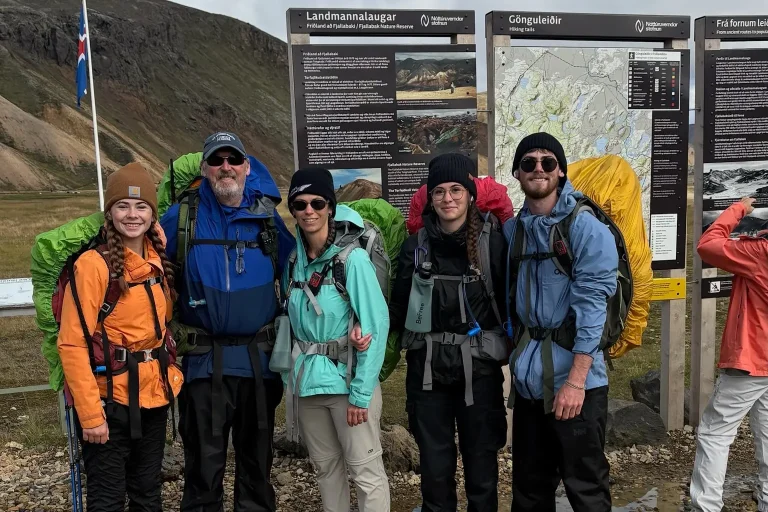
We started the hike expecting everyone in our group to go all the way to Skógafoss. But we also knew that decision might change by the time we reached the end of Laugavegur. Sure enough injuries and accumulated fatigue took a toll on some of our group. By Þórsmörk, even some of our strongest hikers knew this would be the end of the trail for them — a reminder of how hard the Laugavegur can become once weather, elevation, and sustained exposure start to compound.
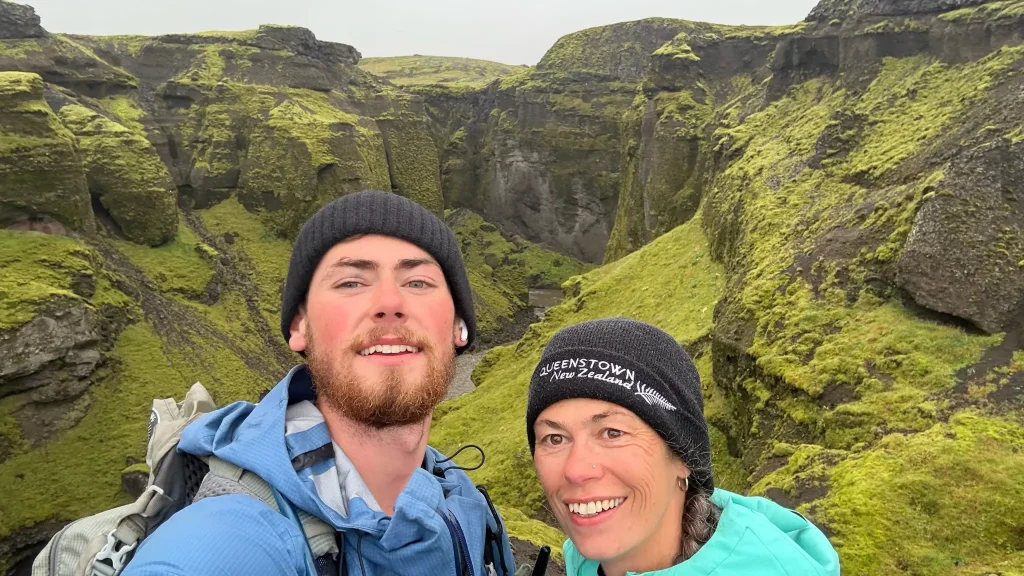
That moment isn’t unusual. The decision to add Fimmvörðuháls isn’t always finalized months in advance. It’s often made on the ground, with muddy boots, changing forecasts, and an honest assessment of how the past few days have gone.
This post is about helping you make that call. Not in theory, and not based on hype, but by clearly laying out how the two finishes differ in commitment, exposure, flexibility, and mental load. If you’re weighing whether to stop at Þórsmörk or continue on to Fimmvörðuháls, this comparison is meant to offer clarity, not push you in either direction.
Laugavegur Planning at a Glance
This planning overview is designed to help you organize the most important parts of your trip without overcomplicating things
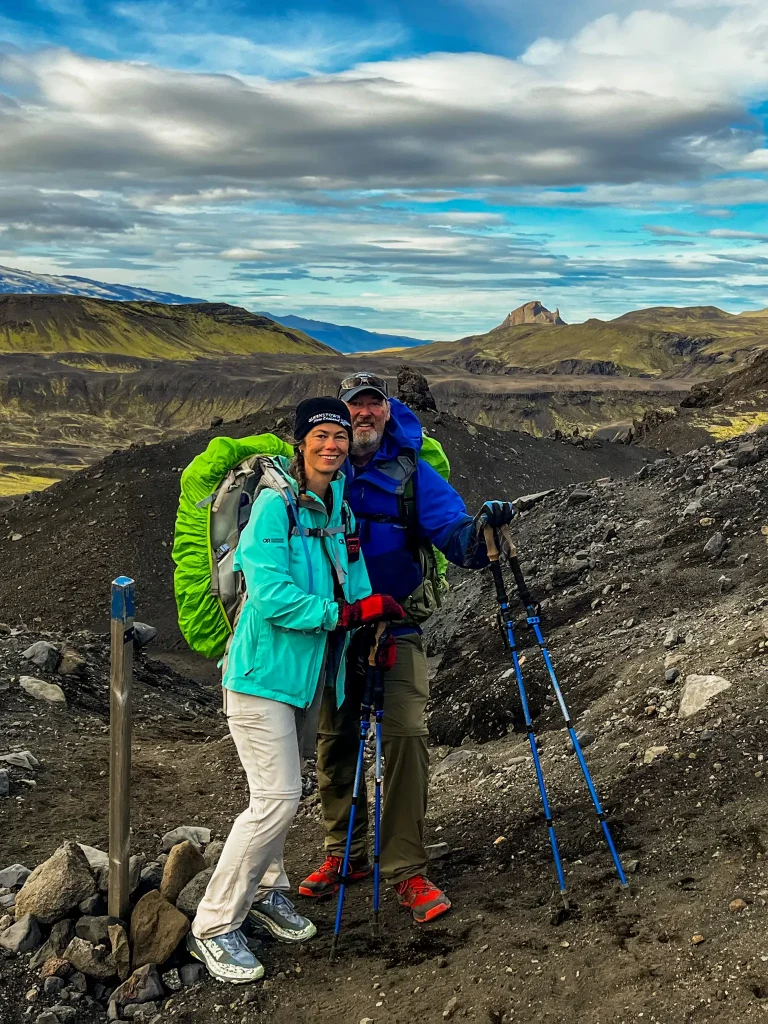
Want everything organized in one place? Explore the Complete Laugavegur Planner.
Where to Stay the Night Before:
Trail Planning Resources:
Book Ahead:
- Rental Car/Shuttle- Discovercars
- Travel Insurance- Safety Wing
- eSIM- Saily
TL;DR
⚖️ Side by Side Comparison
Laugavegur
Distance: ~55 km
Typical duration: 4 days
Elevation gain: ~2,000 m
Huts: 6 along the route
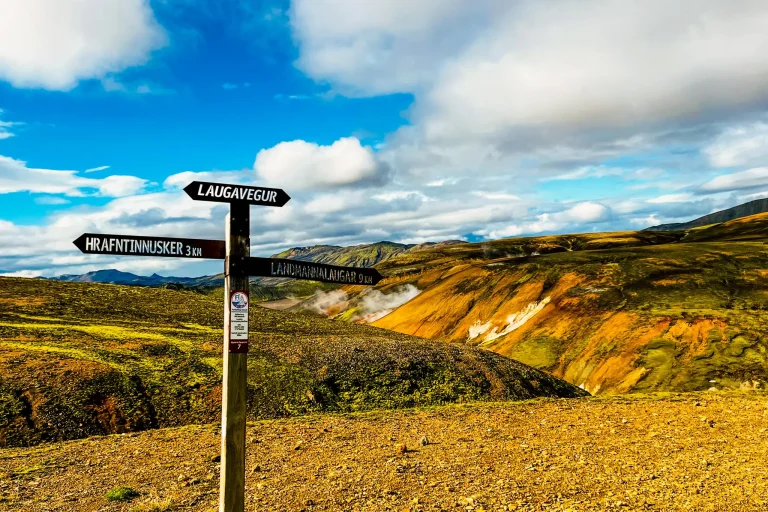
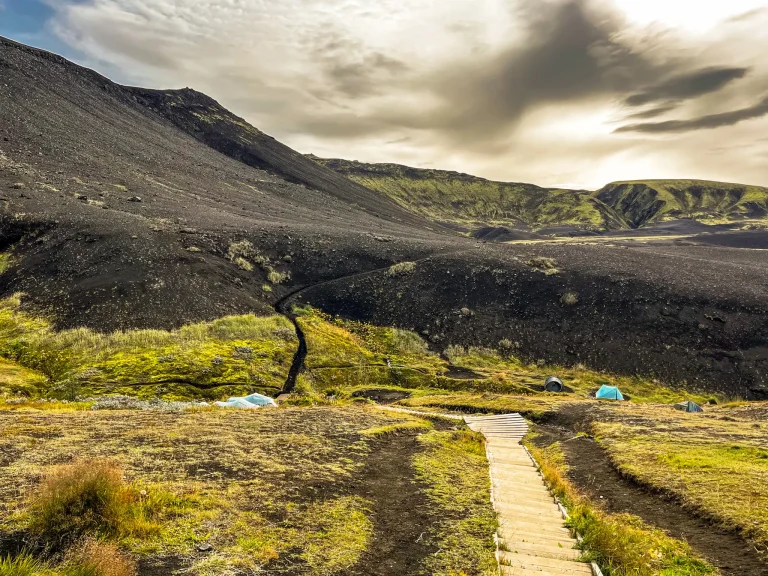
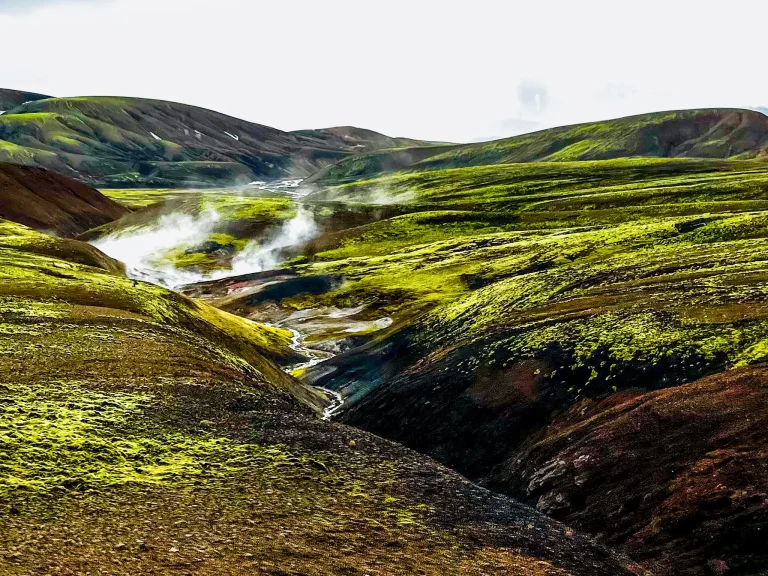
Terrain: geothermal areas, rhyolite mountains, black sand, river crossings
Natural endpoint: Þórsmörk
Best for hikers:
✅ With time constraints
✅ Wanting to spend time exploring Þórsmörk,
✅ Managing injuries or accumulated fatigue,
✅ Not prepared for continued or suddenly severe weather and trail conditions.
Laugavegur Fimmvörðuháls Combo
Total distance: ~78 km
Typical duration: 5–6 days
Total elevation gain: ~3,000 m
Additional huts: 2 huts a few kms apart
Terrain changes: higher exposure, volcanic ridges, snowfields, glaciers, steeper descents, more river crossings
Final endpoint: Skógafoss
Best for hikers:
✅ Comfortable with added exposure and elevation
✅ With stamina and supplies to extend 1-2 extra days
✅ Mentally and physically prepared for extreme weather and terrain conditions
Where the Decision Actually Happens
Reaching Þórsmörk marks a shift. Up to this point, hikers are following the Laugavegur as it was designed. Once they arrive, that hike is complete. Everything beyond this point is an optional extension.
From here, the question becomes whether adding Fimmvörðuháls still fits how your body feels, how your group is moving, and how the conditions have unfolded. What made sense at the planning stage may no longer feel obvious after several days on the trail.
Continuing is not a default next step. It’s an extension that comes with a different level of commitment. Some hikers are ready for that when they reach Þórsmörk. Others recognize that finishing here already feels right for this trip.
The ability to make that decision in real time depends partly on how your accommodations are structured. Both huts and campsites are typically reserved months in advance, but camping generally offers more flexibility if plans shift, whereas hut reservations tie you to specific nights along the route — an important distinction when considering the overall camping experience on the Laugavegur.

Why add Fimmvörðuháls
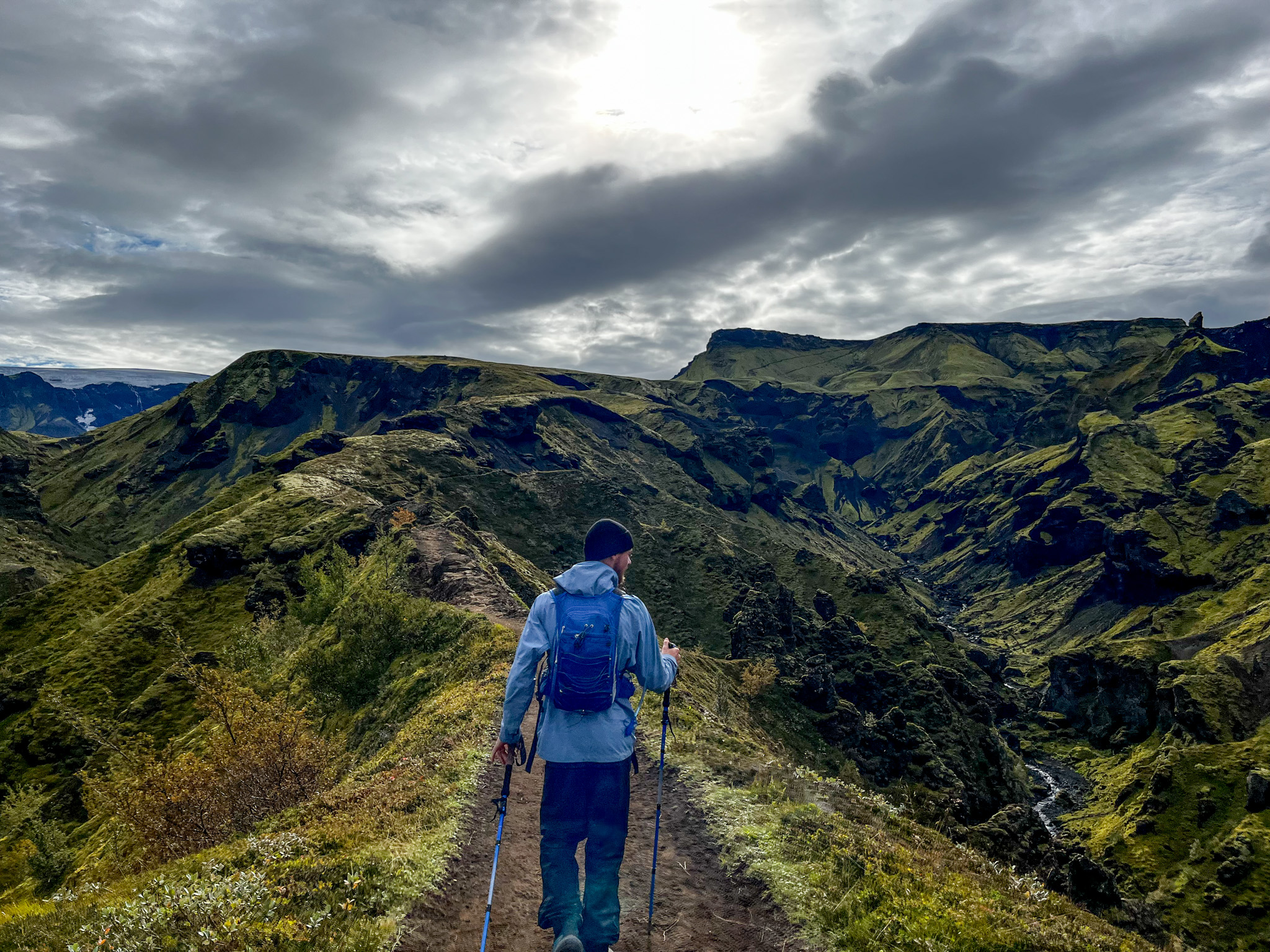
There’s a reason Fimmvörðuháls is so often described as Iceland’s top day hike. It isn’t a single moment or viewpoint. It’s the way the hike unfolds in three very different, equally striking sections.
The ascent sets the tone. The climb is long and steady, and it doesn’t ease in gently. Views open up quickly as the trail gains height, with glaciers coming into view and the landscape feeling bigger and more alpine with every step. It’s demanding, but it feels purposeful, and the scenery keeps pace with the effort— the kind of sustained climb that makes practical Laugavegur Trail tips about pacing, fuelling, and layering feel especially relevant.
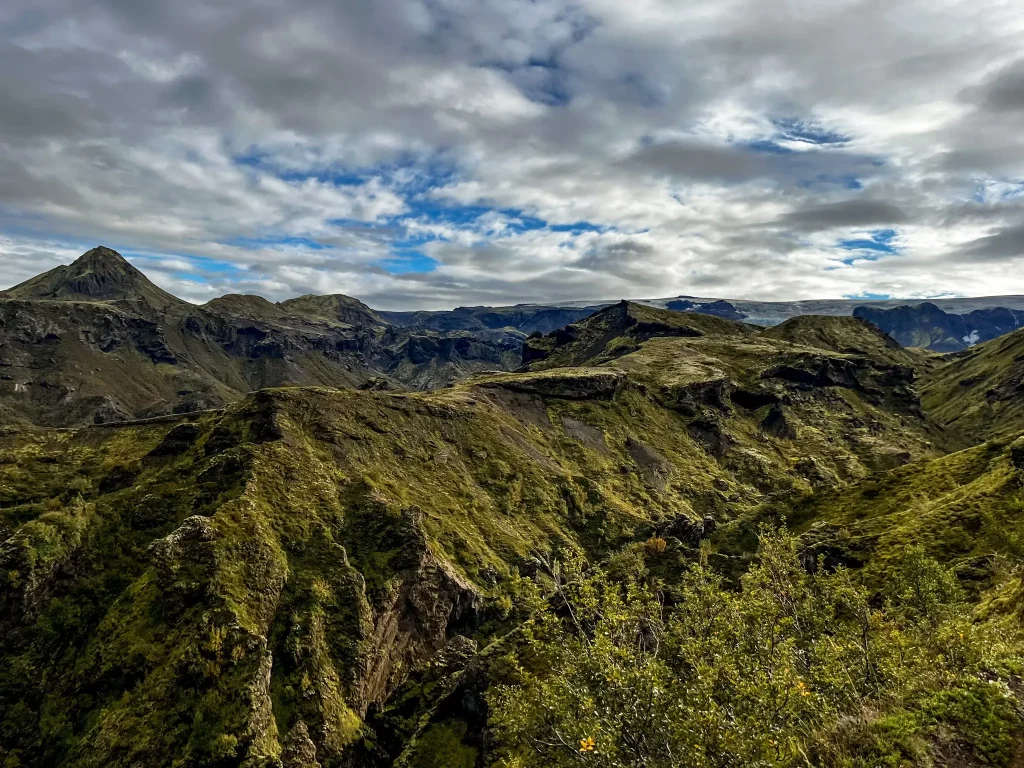
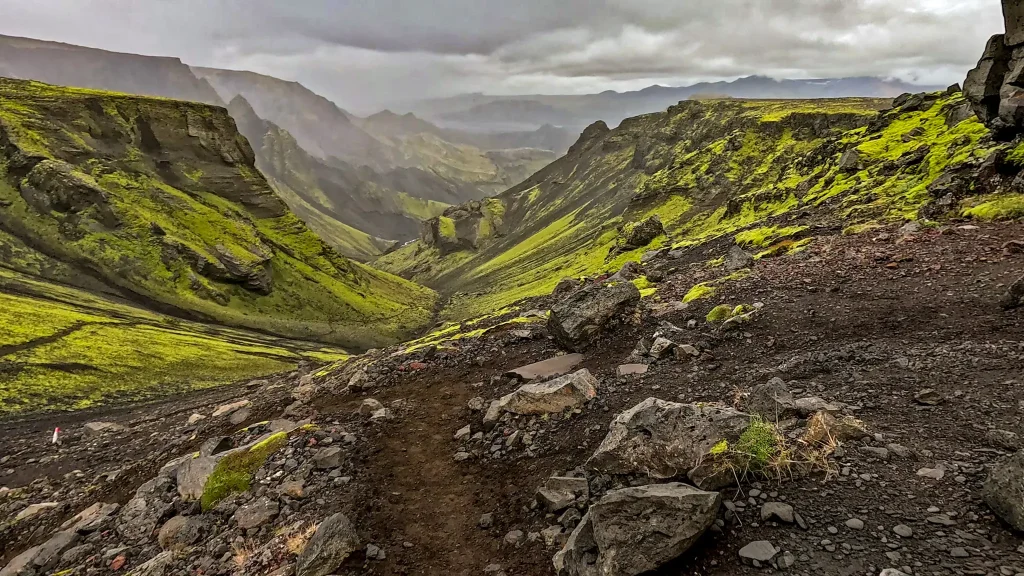
Reaching the pass is the heart of the hike. This section feels raw and exposed, with wide-open views in multiple directions and a strong sense of being high between landscapes. Snow, ice, volcanic ground, and rock all meet here. It’s not a place you rush through. The scale and atmosphere of the pass are part of why this hike stays with people long after it’s over.
Then comes the descent toward Skógafoss, which somehow manages to be just as memorable in a completely different way. The trail follows a long chain of waterfalls, one after another, stacked closely along the route. Even when legs are tired, the scenery keeps changing, and the hike never feels visually finished until the very end.
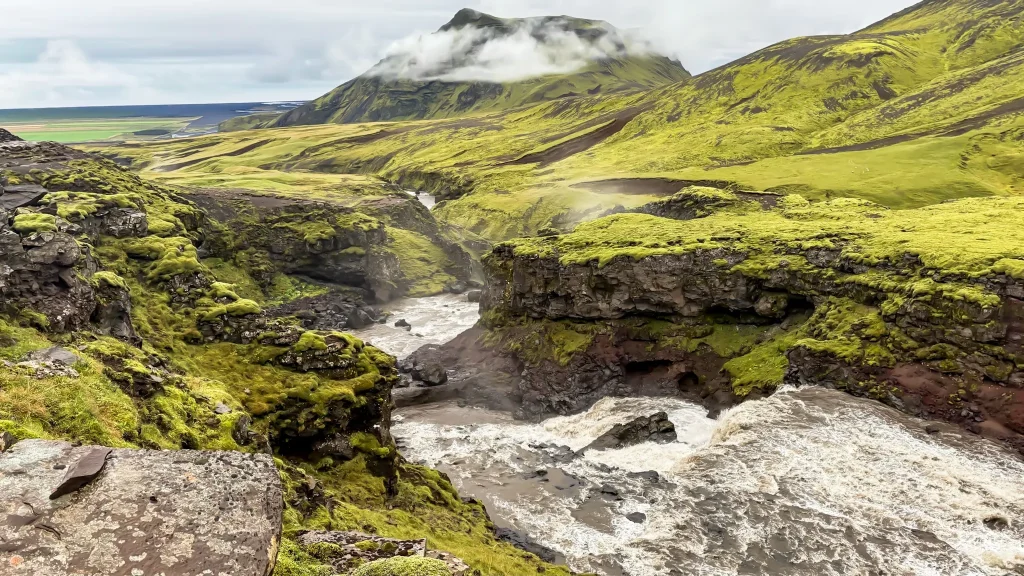
What draws many hikers to add Fimmvörðuháls is this progression. It’s not about improving what came before. It’s about experiencing a different side of Iceland’s landscape in a single, concentrated stretch — alpine ascent, dramatic pass, and waterfall-lined descent — each distinct, and each unforgettable.
For those who choose to continue past Þórsmörk and combine the Laugavegur and Fimmvörðuháls, the experience will shape the entire hike. Fimmvörðuháls can feel complete on its own. It’s hard (really hard), and it’s beautiful, and it offers an experience that doesn’t simply blend into the rest of the trek.
Terrain Changes on Fimmvörðuháls
The terrain on Fimmvörðuháls is markedly different from the Laugavegur, not better or worse, but more concentrated and alpine in character.
The ascent is long and steady, with sustained elevation gain rather than short climbs. Footing varies between packed trail, loose volcanic sand, and rock. The climb feels significant from the outset. There are few flat sections, and progress can be slow without training.
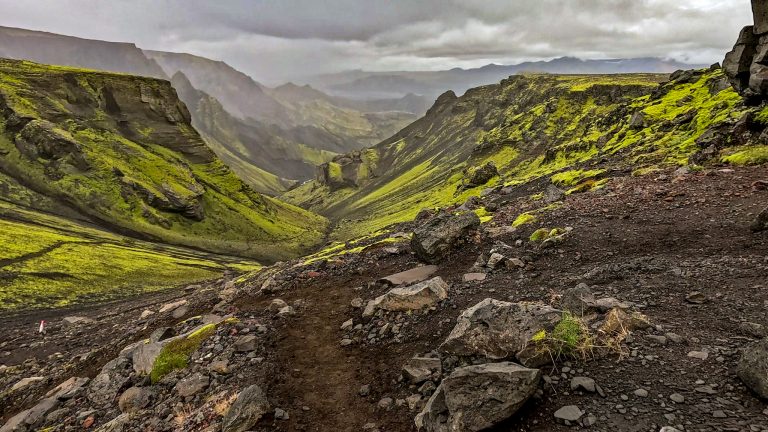
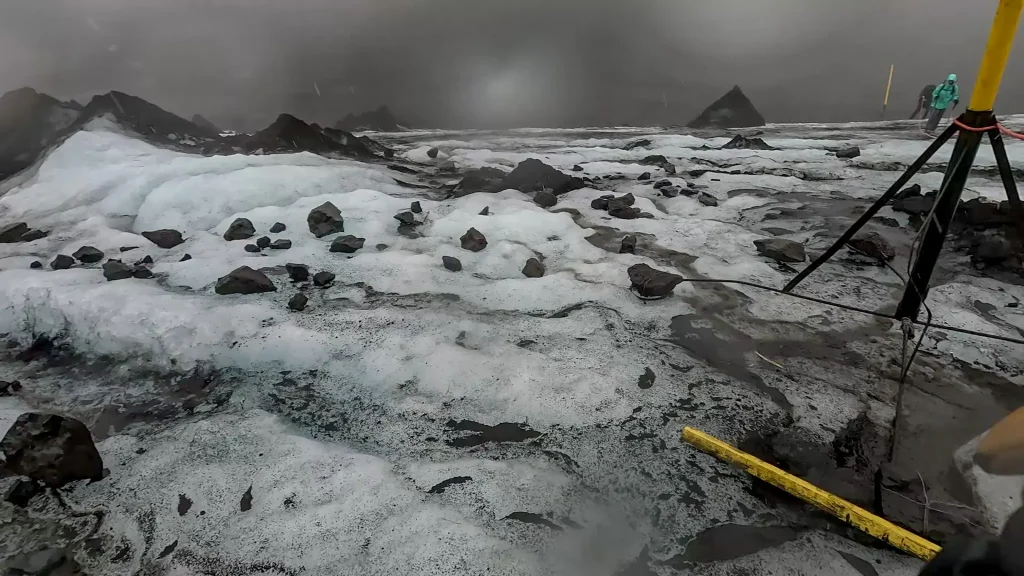
Near the pass, the terrain becomes more complex. This section includes a glacier crossing and stretches where snow and ice can be present, even when lower sections are clear. The ground alternates between rock, compacted snow, and volcanic material. Additionally, route finding can require more focus than earlier days on the trek. This is the most alpine-feeling portion of the route.
The descent toward Skógafoss is long, but it is generally straightforward. Compared to some downhill sections on the Laugavegur, the footing is more consistent and easier to navigate. It isn’t overly technical, nor is it particularly hard on the knees.
What makes this section demanding is distance, not difficulty. The downhill continues for a long time, and fatigue can build simply from the length of the trail rather than from steep or awkward terrain. However for hikers who split Fimmvörðuháls over two days, this section can be tackled on relatively fresh legs, making it feel much more manageable.
The ascent, the pass, and the descent are distinct, each having their own challenges and demands. Together they create a demanding trail with incredible views that are earned through steady, sustained effort.
Weather Exposure and Tolerance for Uncertainty
Weather can be challenging anywhere along the Laugavegur, and some hikers experience difficult conditions throughout the entire trek. That risk exists regardless of where the trail ends. What changes after Þórsmörk is how strongly weather affects the experience.
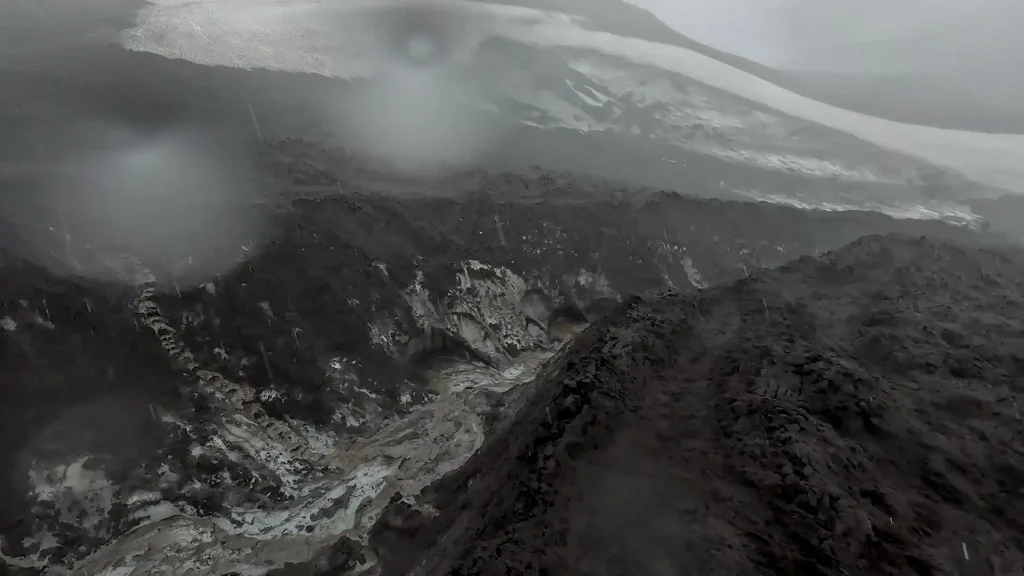
On Fimmvörðuháls, exposure plays a larger role. Wind, cloud cover, and precipitation have a more direct effect on visibility, navigation, and pace, particularly near the pass. When conditions deteriorate, progress can slow quickly, and decision-making becomes more demanding.
In our case, Fimmvörðuháls earned a spot in our personal worst-weather hiking hall of fame. It was, without question, the most challenging weather we’ve encountered on the trail so far. Gusting wind, pounding rain, and low visibility compounded an already demanding trail.
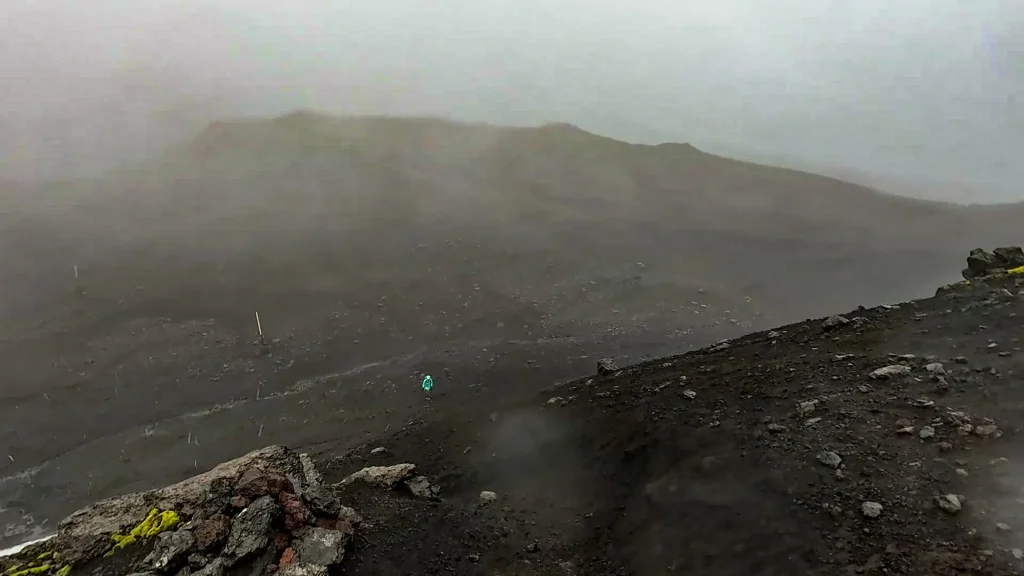
Heavy fog contributed to us veering off trail, and getting back on route required careful navigation rather than a simple correction. When weather reduces visibility, increases exposure, or slows progress, the margin for error shrinks quickly. This is especially relevant late in a multi-day trek, when fatigue has already accumulated and staying dry and properly layered becomes critical in alpine conditions.
Choosing to continue beyond Þórsmörk means accepting that weather may have a greater influence on how the final stretch unfolds. For some hikers, that uncertainty is part of the draw. For others, finishing at Þórsmörk offers a clearer and more predictable end to the journey.
Regardless of where the trail ends, packing considerations remain largely the same. Weather, exposure, and variable terrain affect both the Laugavegur and the extension beyond Þórsmörk. Our Laugavegur packing list reflects that reality and applies whether you choose to finish at Þórsmörk or continue on to Skógafoss.
Who the Extension Makes Sense For
Deciding whether to continue beyond Þórsmörk doesn’t have to be a group decision. It’s common for hikers to reassess here and choose different endings. On our trek, some of us took the bus out from Þórsmörk, while others continued on to finish at Skógafoss. Fortunately there are several transportation options, so this type of split can be straightforward.
Continuing on to Skógafoss tends to make sense for hikers who:
- still feel physically strong late in the trek
- are comfortable with sustained alpine terrain and exposure
- have experience navigating in low visibility or unsettled conditions
- are prepared for a demanding final stretch, both mentally and physically
- have enough time flexibility to add one or two more days
Stopping at Þórsmörk tends to make sense for hikers who:
- are dealing with accumulating fatigue or minor injuries
- feel less confident with technical terrain or navigation in poor visibility
- have a lower tolerance for uncertain or rapidly changing conditions
- are satisfied finishing the trek at the natural end of the Laugavegur
- are working within tighter time constraints
One additional factor worth noting is how quiet the route itself can feel. While the Laugavegur sees regular foot traffic throughout the day, we encountered very few other hikers while crossing the pass on Fimmvörðuháls, which is also the most demanding section of the route. For long stretches, we were on our own through anxiety inducing conditions.
That said, this solitude wasn’t absolute. We met up with other hikers at the hut, where there was a real sense of shared experience. People took refuge, waited out the weather, and compared notes on conditions. For solo trekkers, this balance is worth understanding: the trail itself can feel isolated through the hardest section, but the huts can still offer moments of community and reassurance when conditions are difficult.
Ultimately, this decision comes down to personal comfort, experience, and time. Both endings are valid. Having the option to stop at Þórsmörk or continue on to Skógafoss allows hikers to finish the trek in a way that fits their individual schedules, confidence, and tolerance for uncertainty.
Budget Considerations
Adding Fimmvörðuháls isn’t just a physical decision — it can also shift the overall cost of your trip. Extending the hike may mean an additional night on the trail, more food, adjusted bus timing, and potentially different accommodation arrangements depending on how your itinerary unfolds.
Even small changes can affect the total Laugavegur Trail costs, particularly if plans shift late in the trip. Extra days on the trail typically mean extra campground or hut fees, additional provisions, and transport adjustments that weren’t part of the original booking.
If you’re weighing whether to continue, it can help to run the numbers ahead of time. Our free Laugavegur budget planner allows you to model different scenarios — stopping at Þórsmörk versus finishing at Skógafoss — so you understand how each option fits within your overall travel budget before committing.
Ultimately, the right choice isn’t just about whether you can continue, but whether extending the trek aligns with your time, energy, and financial flexibility.
Final Thoughts on Adding Fimmvörðuháls to the Laugavegur
There isn’t a single right way to finish the Laugavegur. Ending at Þórsmörk completes the trail as it was designed, and for many hikers, that feels full and satisfying. Continuing on to Fimmvörðuháls adds a very different experience- one shaped by alpine terrain, exposure, and uncertainty, with rewards that are equally real.
What matters most is making the decision honestly, based on how the trek has unfolded and your personal limits rather than how it was imagined months earlier. Fatigue, weather, time constraints, and personal comfort all carry more weight here than ambition or plans on paper. Choosing to stop or continue can be equally wise decisions when making an informed choice.
Both endings offer moments of beauty, challenge, and perspective. Being attentive to the conditions around you, and to what your body and mind are telling you, is part of hiking well. There’s a quiet wisdom in recognizing when a journey is complete, and also in stepping forward when the moment feels right.
However the trek ends, the landscapes you move through are gifts. Embrace the blessings and cherish the opportunities given by the One who gives us the strength to walk these rugged trails, the privilege to witness their beauty, and the wisdom to choose our path well.